Rome, Italy and Vatican City
I remember visiting Rome and Vatican City years ago and being stunned by the amount of art masterpieces and history in one area. It really feels like visiting a living history book or art history class. I loved both places and I know Darrel and the kiddos are going to love it as well.
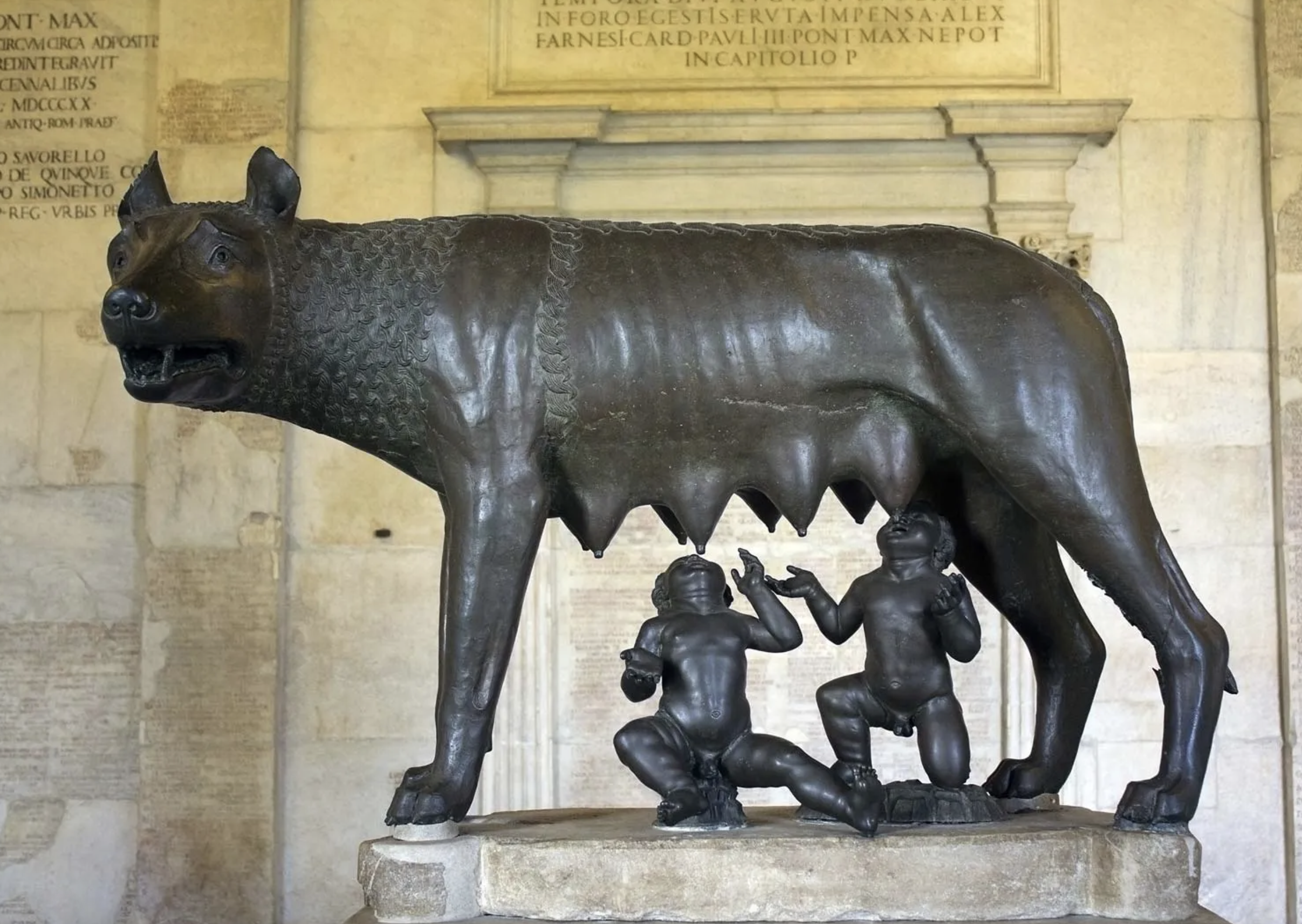
Rome, known as the Eternal City, has a history that stretches back nearly 3,000 years and has shaped much of the Western world. According to legend, Rome was founded by the twins Romulus and Remus, who were raised by a she-wolf (of course). In 753 BC Romulus supposedly killed his twin brother and became ruler of the area. It began as a small settlement of Latin tribes on the hills along the Tiber River.
For about 250 years it was ruled by kings (the Roman Kingdom), with the last king overthrown in 509 BC because of his tyranny. This led to the Roman Republic, where power was shared among elected officials and the Senate. During the Republic, Rome expanded aggressively. It conquered the Italian peninsula, then defeated its great rival Carthage in the Punic Wars ending in 146 BC.
By the 1st century BC, Rome controlled huge territories across the Mediterranean. This era also saw major internal struggles, including the rise of powerful generals like Julius Caesar. Caesar was assassinated in 44 BC, which triggered more civil wars. His adopted heir, Octavian, eventually won and became Augustus, the first emperor, in 27 BC. This marked the start of the Roman Empire. At its peak under emperors like Trajan and Hadrian, the Empire stretched from Britain to Egypt and the Middle East. The Romans built incredible roads, aqueducts, arenas like the Colosseum and a system of law that still influences many countries today.
However, by the 3rd and 4th centuries, the Empire faced economic troubles, invasions, and division. In 476 AD, the last Western Roman emperor was overthrown, traditionally seen as the “fall” of Rome. Yet the Eastern Roman (Byzantine) Empire continued for another thousand years. Rome itself survived as a city through the Middle Ages, Renaissance, and beyond. It became the capital of unified Italy in 1870.
In the 20th century, Rome once again found itself at the center of major events. During the 1920s and 1930s, Benito Mussolini turned the city into the showcase of his Fascist regime, widening grand avenues and staging massive rallies. World War II brought heavy damage from Allied bombing, and in 1944 Rome was liberated by American and British forces. After the war, the city helped lead Italy’s "economic miracle" and became a global symbol of art, fashion, and la dolce vita in the 1950s and 60s. Today, Rome is a bustling modern capital of nearly 2.8 million people, where ancient ruins sit alongside busy cafés and vibrant neighborhoods.
Vatican City
Vatican City is the smallest country in the world within Rome at just 109 acres. But do not be fooled by its size; Vatican City is incredibly important for many reasons. Its history is tied to early Christianity. The apostle Saint Peter, considered the first Pope, was martyred in Rome around 64–68 AD. Early Christians believed he was buried on Vatican Hill. In the 4th century, Emperor Constantine, the first Christian Roman emperor, built a major basilica over that tomb, the original St. Peter’s Basilica.
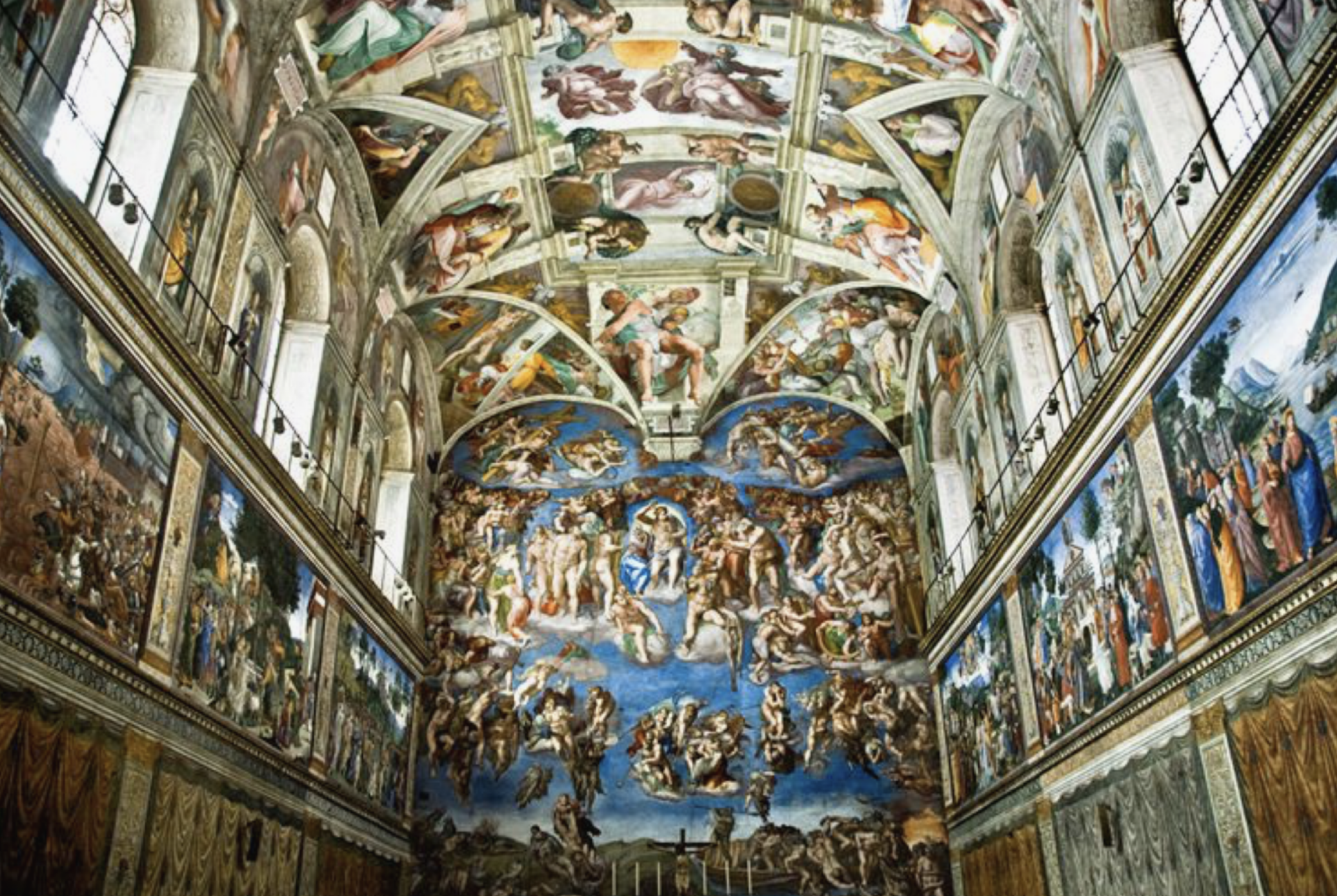
For centuries, the popes gained more power and land, eventually ruling the Papal States or large parts of central Italy. The Vatican area became the main home of the popes. In the early 14th century, the papacy moved to France for about 70 years known as the Avignon Papacy, but returned to Rome in 1377. Over the following centuries, popes commissioned incredible art and buildings, including the current St. Peter’s Basilica, the Sistine Chapel, and the Vatican Museums.
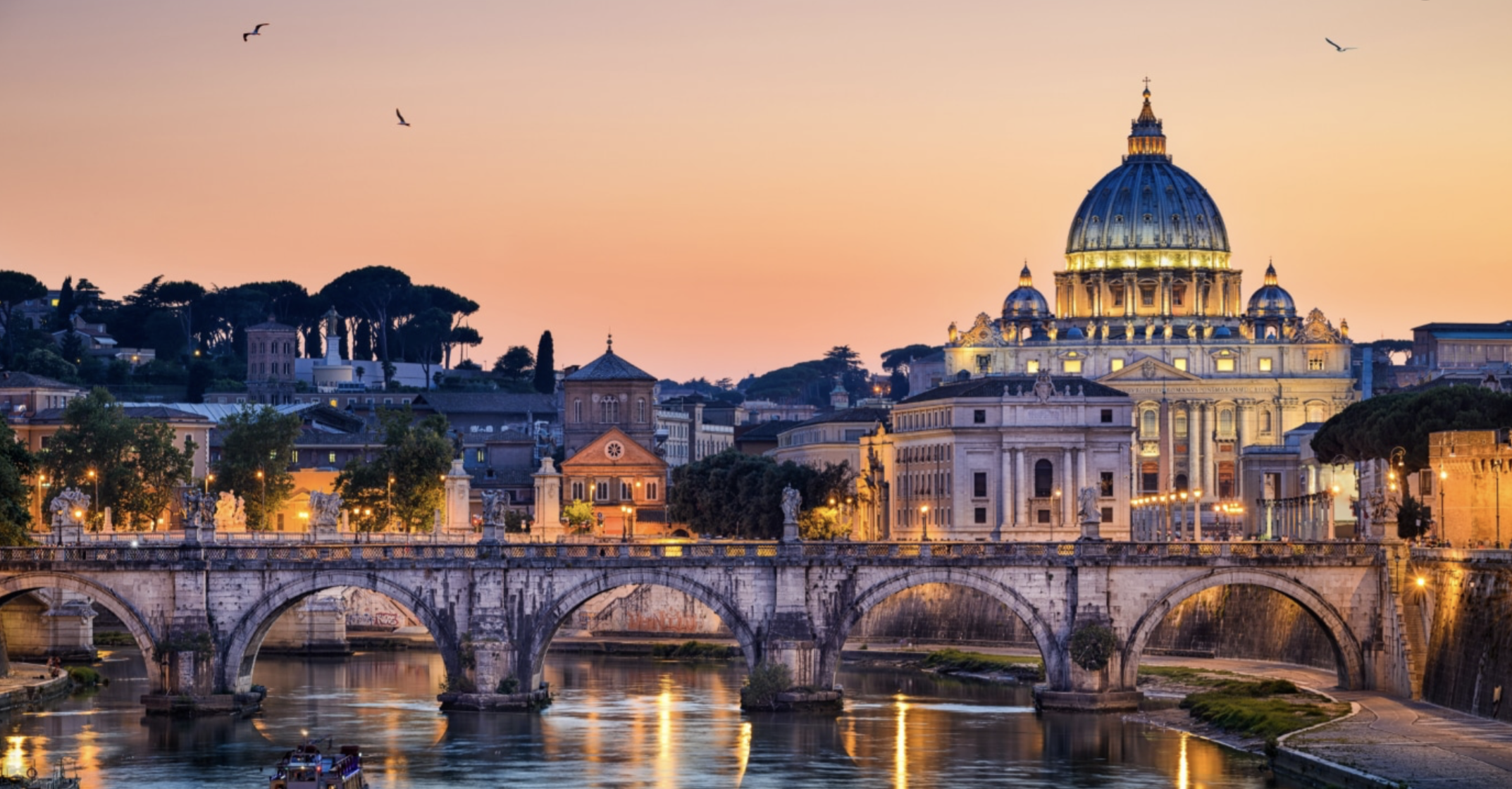
In the 1800s, when Italy unified, the new Italian government took over the Papal States and Rome. Popes refused to accept this and stayed inside the Vatican as “prisoners.” This awkward situation lasted until 1929, when the Lateran Treaty between the Pope and Mussolini’s Italy created the independent state of Vatican City. It is ruled by the Pope, and serves as the global headquarters of the Roman Catholic Church.
Rome and the Vatican together are like a living history book with ancient pagan ruins standing next to Christian masterpieces, all in one place. It’s where emperors once ruled the known world and where over a billion Catholics still look to for spiritual leadership.
THINGS TO DO
Colosseum This is the iconic ancient amphitheater where gladiators fought. We will explore the arena, underground chambers with a guide.
Vatican Museums & Sistine Chapel World-famous art collection with Michelangelo's Sistine Chapel ceiling and Raphael Rooms.
Pantheon Perfectly preserved ancient temple with massive dome and oculus.
Trevi Fountain Baroque masterpiece where you toss a coin for good luck!
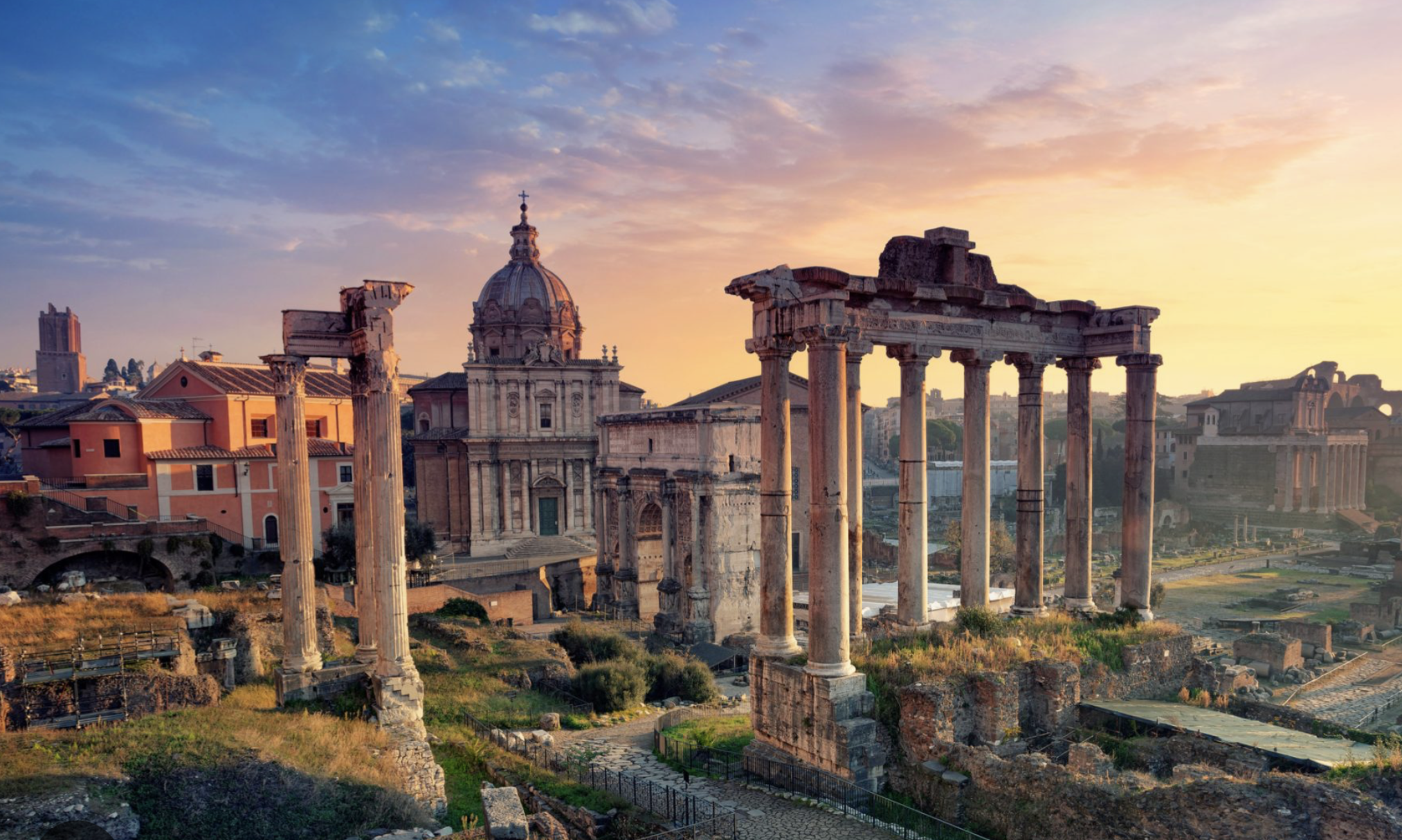
Roman Forum & Palatine Hill Heart of ancient Rome with ruins of temples, basilicas, and emperors' palaces. panoramic views from the hill.
St. Peter's Basilica Majestic dome and Michelangelo's Pietà. We can climb to the top for epic views.
Piazza Navona Baroque square with Bernini fountains, street artists, and cafes.
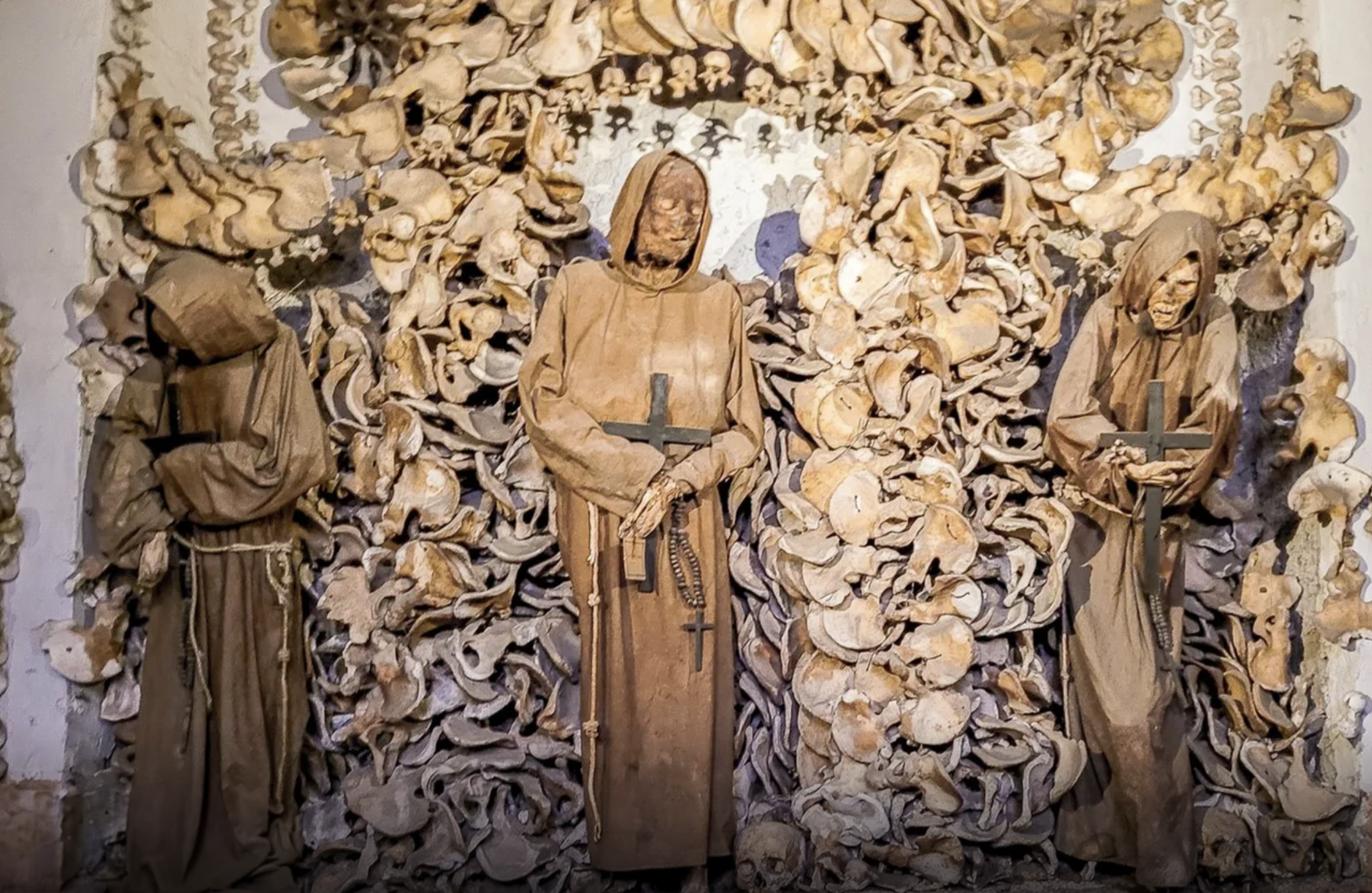
Capuchin Crypt (Cripta dei Cappuccini) Creepy underground chapel decorated with bones of 4,000 friars arranged in artistic patterns. It is supposed to be a little macabre and fascinating.
Catacombs of San Callixtus or San Sebastiano Ancient underground Christian burial tunnels with frescoes and tombs.