Marrakesh- Our Visit!
Darrel:
In 2022, we planned to go to Morocco to celebrate my 40th birthday. We were to enter via Marrakesh, travel to the blue city of Chefchoeun, glamp in the Sahara desert, and do water sports in Essouaira. We had the tickets and the itinerary.
In March of 2023, one month before we were set to leave, a jiu jitsu sweep gone wrong ripped the meniscus off of my left knee. I didnt walk again for several months. We canceled our tickets. Morocco was put in the dustbin of great ideas.
In the buildup to this tour of Morocco, Europe, and Turkey, we faced a lot of challenges. I had to push on an obscure section of policy at work allowing for one-time unpaid leave of absence for up to one year. I needed signatures from the chief of Police and the city manager of Austin, Texas. I got them. We got a surprising number of negative comments from people around us. We ignored them. We needed the money. We saved it. The trip was complex. Leslie spent late nights planning it.
On May 26th, 2026, we exited the Marrakesh Airport. On our way to the riad, as I looked at the city passing by, I felt proud. We had stayed the course. We brought our family to Morocco. I thought of Kiplings Kim.
In Kim, a wandering lama is adopted by a young boy, Kim. He is an Aladdin type figure, a street urchin ready to beg, barter and steal. The lama is a hopeless old religious figure in search of a (possibly mythical) river formed by an arrow shot by the Buddha. Kim guides the lama through India, more for adventure than any religious feeling. When the lama finds his river, it isn’t any more likely to be THE river than the next. He has decided it is so, though, and his quest is finished. The final lines are what I thought of:
“He crossed his hands on his lap and smiled, as a man may who has won salvation for himself and his beloved.”
Leslie:
We left Austin on Monday, May 25th around 7 a.m. for our 10:30 flight. We hugged and kissed the puppies, who side-eyed us with our luggage. Mom dropped us off at the airport. It was a rough start. In the rush of unloading gear with our nerves running high (are we really leaving for ten weeks right now?!), Darrel left his phone in the car. At the same moment, I somehow sliced my finger open and was bleeding deep red down my arm and onto our bags. Finn was anxiously repeating, "maybe this means we shouldn't go." Penny was already organizing an emergency plan.
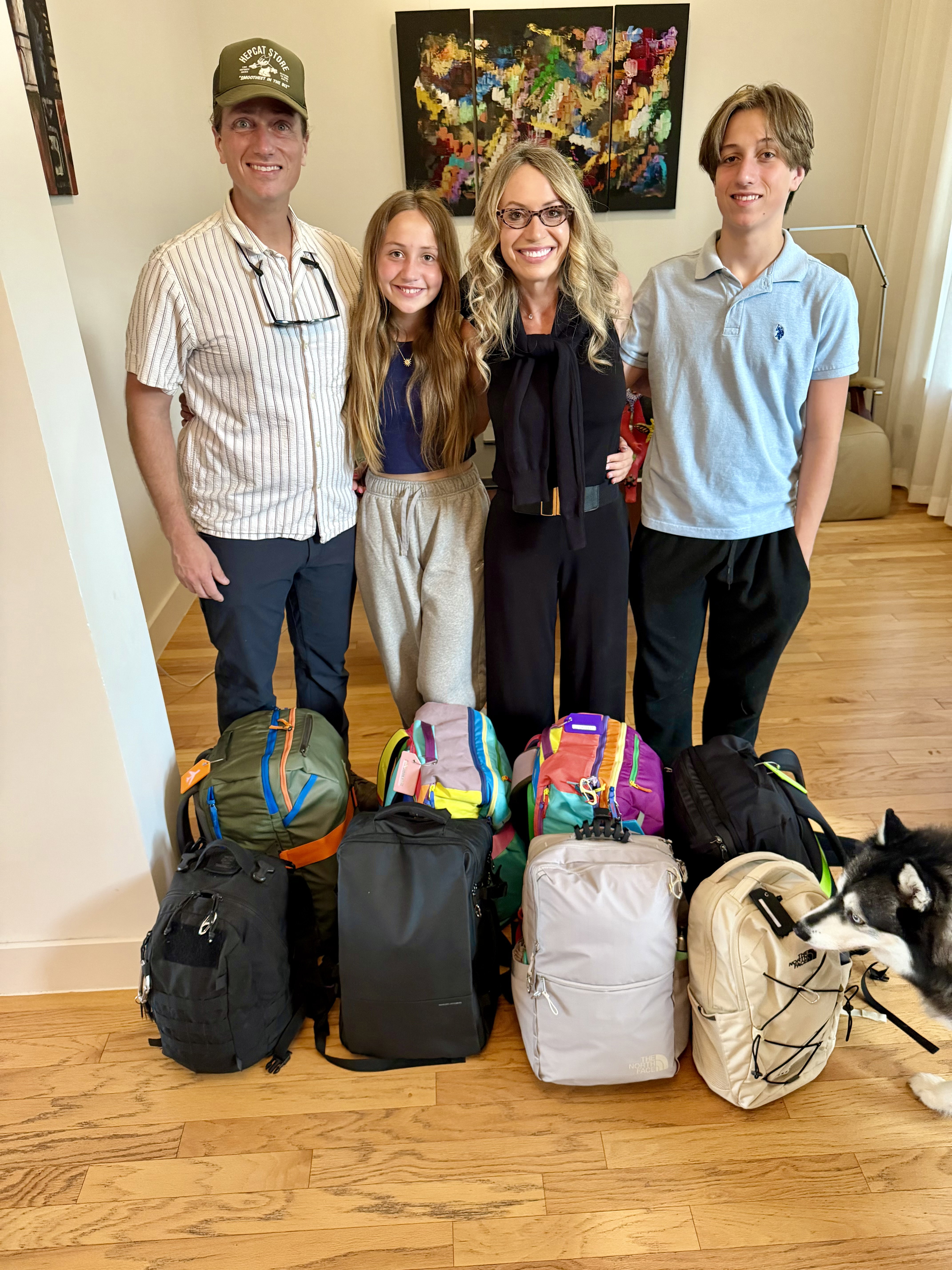
Luckily, Darrel noticed the missing phone almost immediately. We called Mom to turn around. As a family, we put our collective foot down. Mom is now required to use her self-driving car. In this frantic moment, she accidentally entered the wrong terminal into the car's computer and the car dutifully took her to the newer one. Twenty minutes later my bleeding had stopped, Darrel's phone was back in hand, Finn's anxiety was in the yellow and we were finally on our way. We decided this wasn’t some ominous sign of things to come, just one of the many snafus we would experience on the trip. We had already had this conversation as a family: snafus are definitely going to happen. We must radically accept them as a part of long-term travel.
Because our tickets were points-based (and basically free!), the journey became a multi-stop odyssey. Our trip included a 3 hour flight from Austin to Miami, 5 hour layover, 9 hours from Miami to London-Heathrow, a one hour bus transfer to Gatwick, another 5 hour layover, and then a 4 hour flight from Gatwick to Marrakesh. Twenty-nine hours of travel in total from door to door. The kids were absolute champs. Penny and Finn both agreed the nine-hour flight from Miami to London was the most uncomfortable they had been in their entire lives. But, they didn’t complain. They simply stated the discomfort as fact. I was already proud of them.
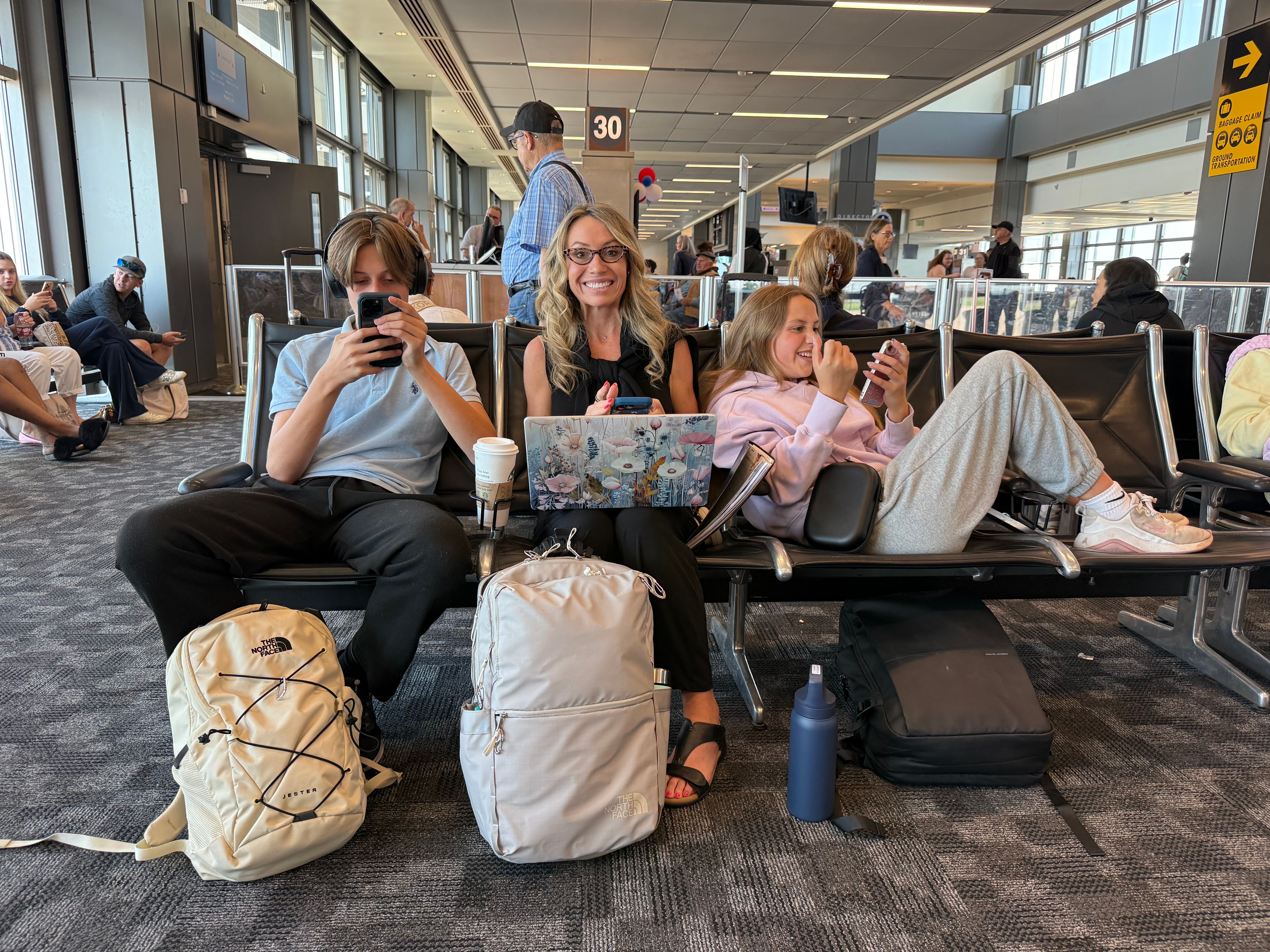
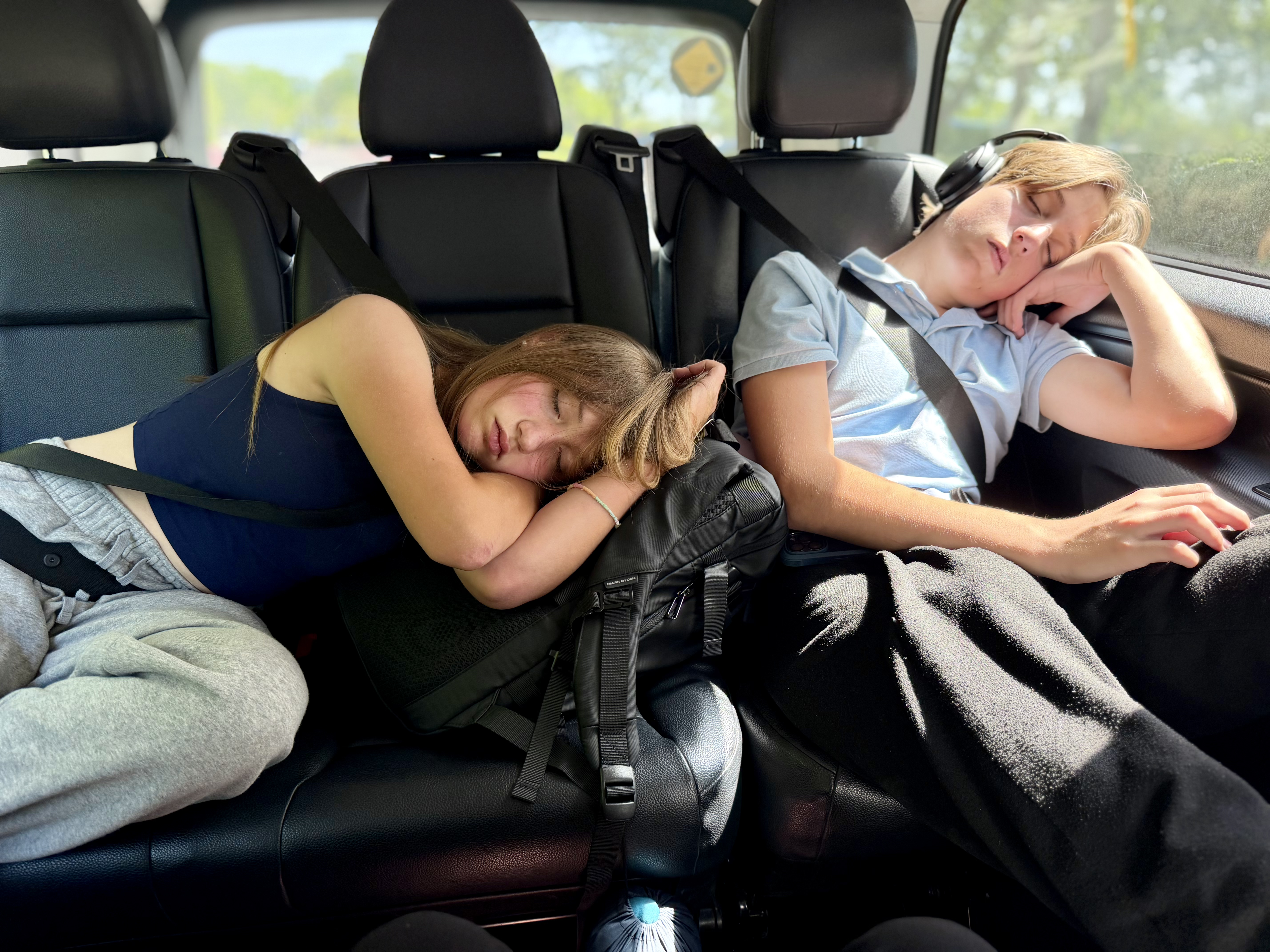
Finn and Penny launched into a wrestling match with the seats. Heads bobbed from the headrest, to the chair in front of them, to the food tray, to my shoulder, and finally, to my lap. I finally gave them Benadryl (pre-approved by the pediatrician). They took turns piling onto me like human blankets. Darrel studied his French book. We all got through it.
We landed in Marrakesh around 6:20 p.m. local time, while our bodies insisted it was only 12:20 p.m. Jet lag hit harder than I expected. Even three weeks later, we are still wrestling with it. In studying the science of jet-lag, I had seen the word, "akrasia" several times. It perfectly describes our current condition: acting against your own better judgment, even though you know what you should do. As the clock turns to 10:00 pm every night, we all say to each other, we really need to go to sleep. We all stay up anyways. This has prolonged the jet-lag significantly.
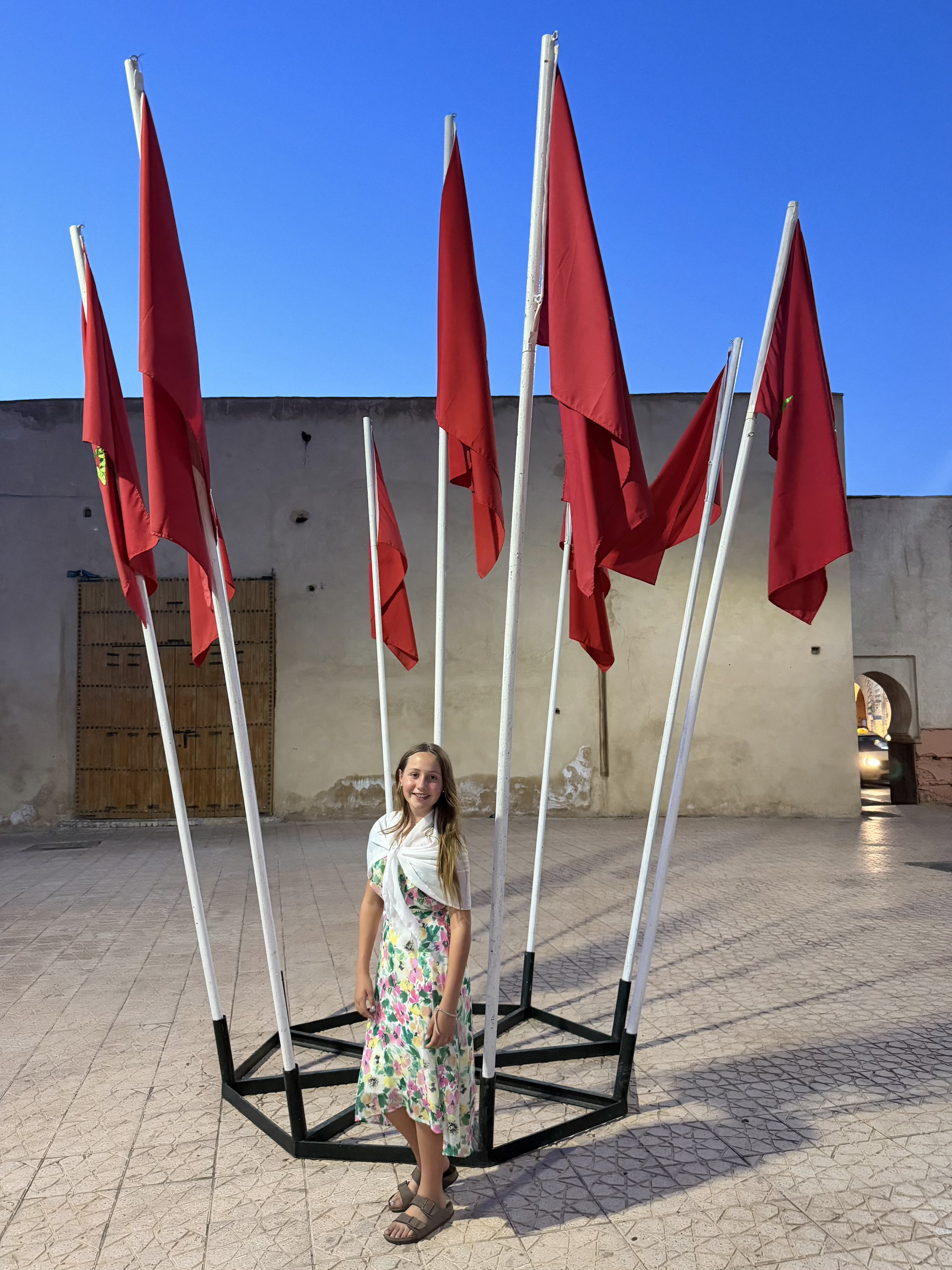
Our first impression of Marrakesh surprised us. The newer part of the city from the airport to our riad felt cleaner and more developed than we had anticipated. The airport was nicer than many back home, and customs moved with impressive efficiency. It was far better than Barcelona’s hour-long ordeal. The streets outside the medina walls were well maintained, lined with large red Moroccan flags and antique-style lamp posts. Palm trees and blooming oleander lined the main roads. I don’t know exactly what I expected, but it wasn’t this. Photos of the Medina appeared similar to my travels in parts of India and Africa. The frenzied traffic did echo India, but so much here felt uniquely Marrakeshi.
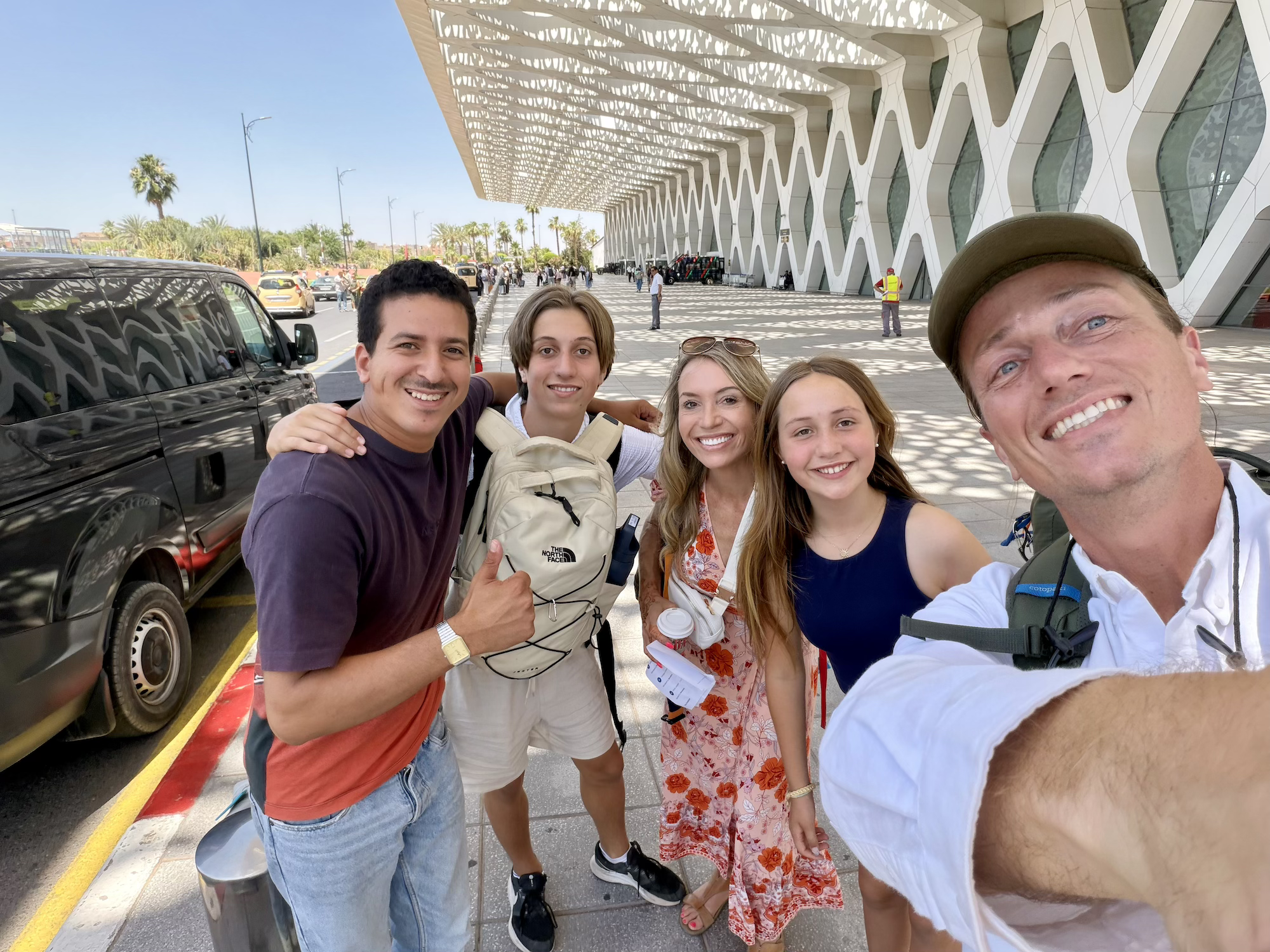
A cheerful driver sent by our Airbnb host, Younes, greeted us at the airport. Younes proved an incredible host before we had even left Texas. He helped me plan excursions and connected us with Yazid, our private driver for the entirety of our stay in Marrakesh.
Having a personal driver turned out to be much cheaper and safer than taxis or big tour companies. I’d checked prices on Viator and Get Your Guide and Yazid’s rates were sometimes seventy percent lower. Plus, he was a joy. His English was clear and had funny quirks like saying, "I'm not gunna lie," before every third sentence. He was also incredibly thoughtful, buying us coffee and snacks regularly and insisting on paying himself. Penny had mentioned she was looking for a bright orange spice, and he showed up with two vials of it at our next pickup. He treated us to fresh oranges and beautiful cookies. He added so much to our experience.
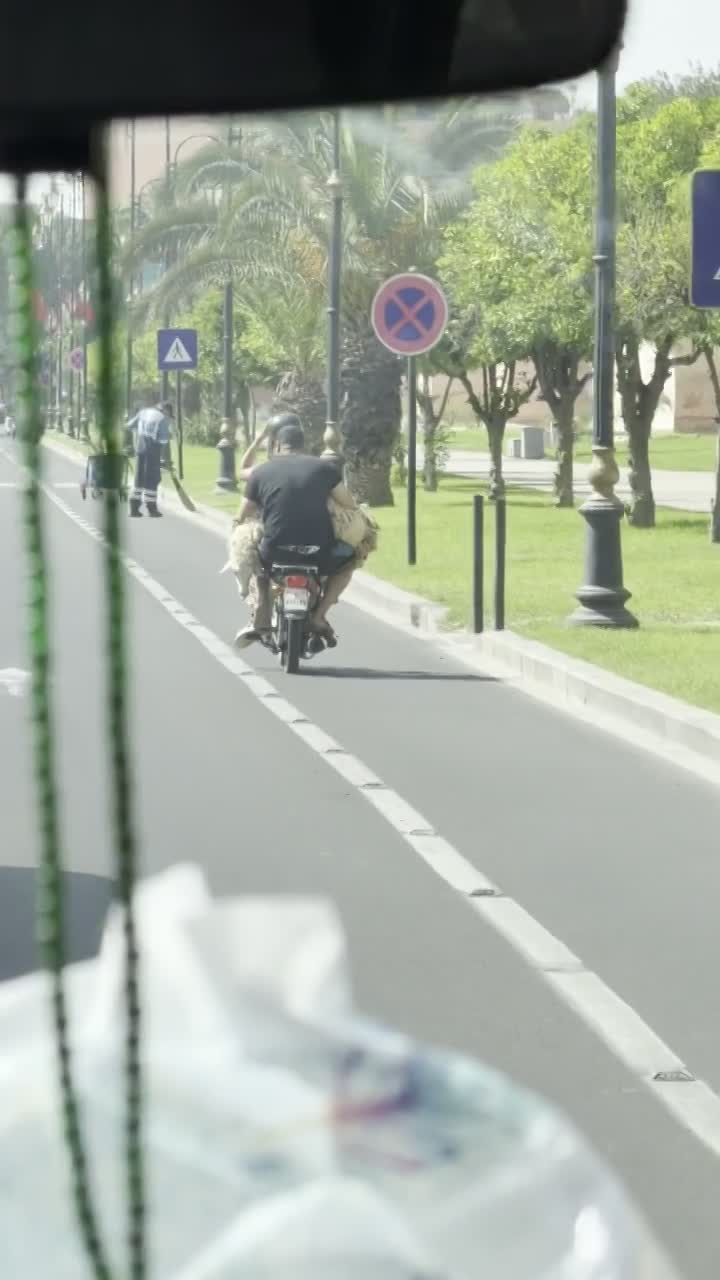
Though we walked miles every day on our own discovering the city, Yazid drove us to places like the Ourika Valley, showed us key monuments, and patiently answered our endless questions about Morocco’s politics, culture, and daily life. The driving in Marrakesh was very chaotic with scooters, motorcycles, donkey carts, pedestrians, and cars weaving tightly together. We saw two men on a motor scooter with a live sheep sandwiched between them. When we walked in the medina, motor scooters zoomed by us with mere inches to spare. Yazid was slow and cautious. Thank you, Yazid.
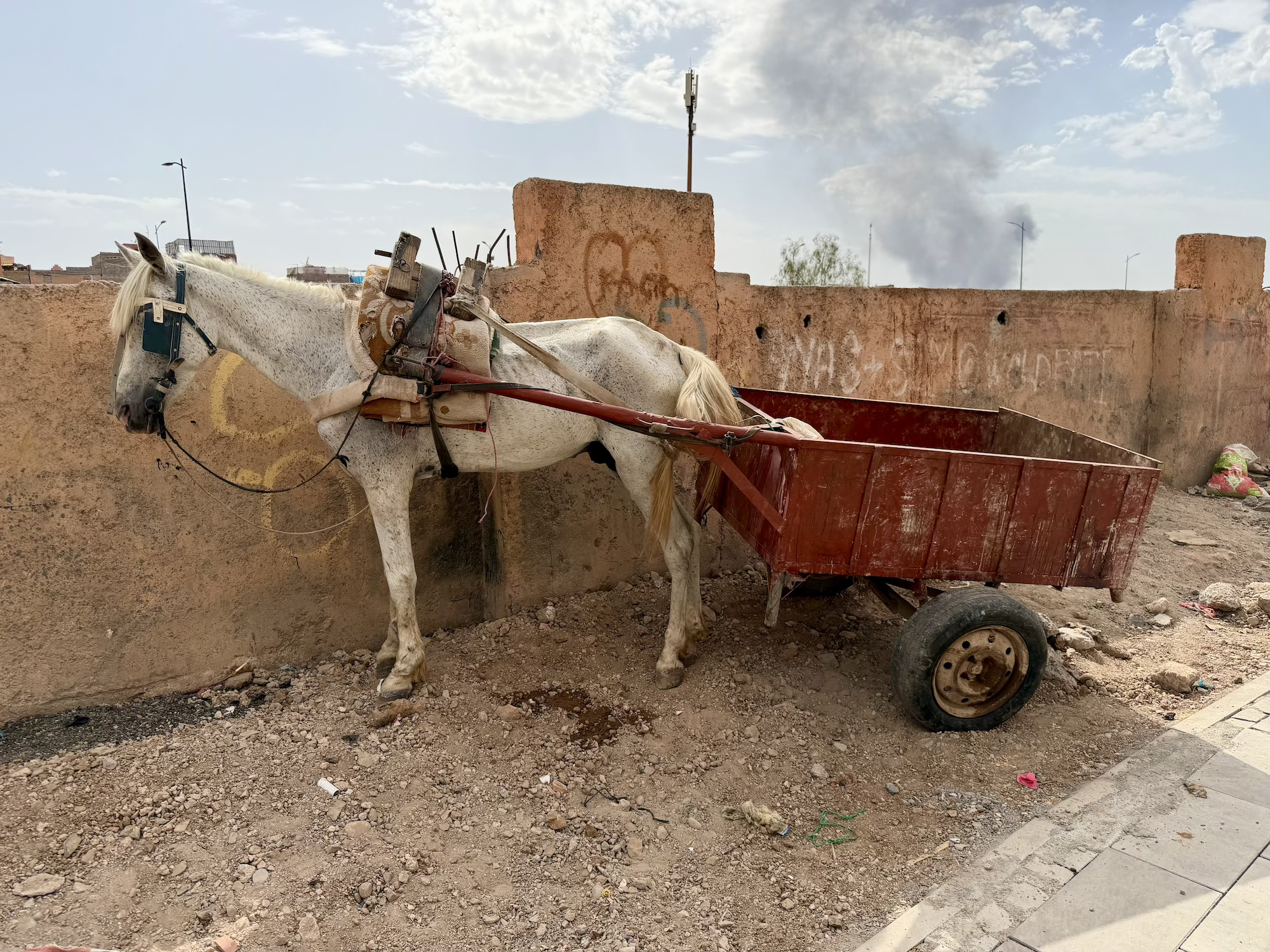
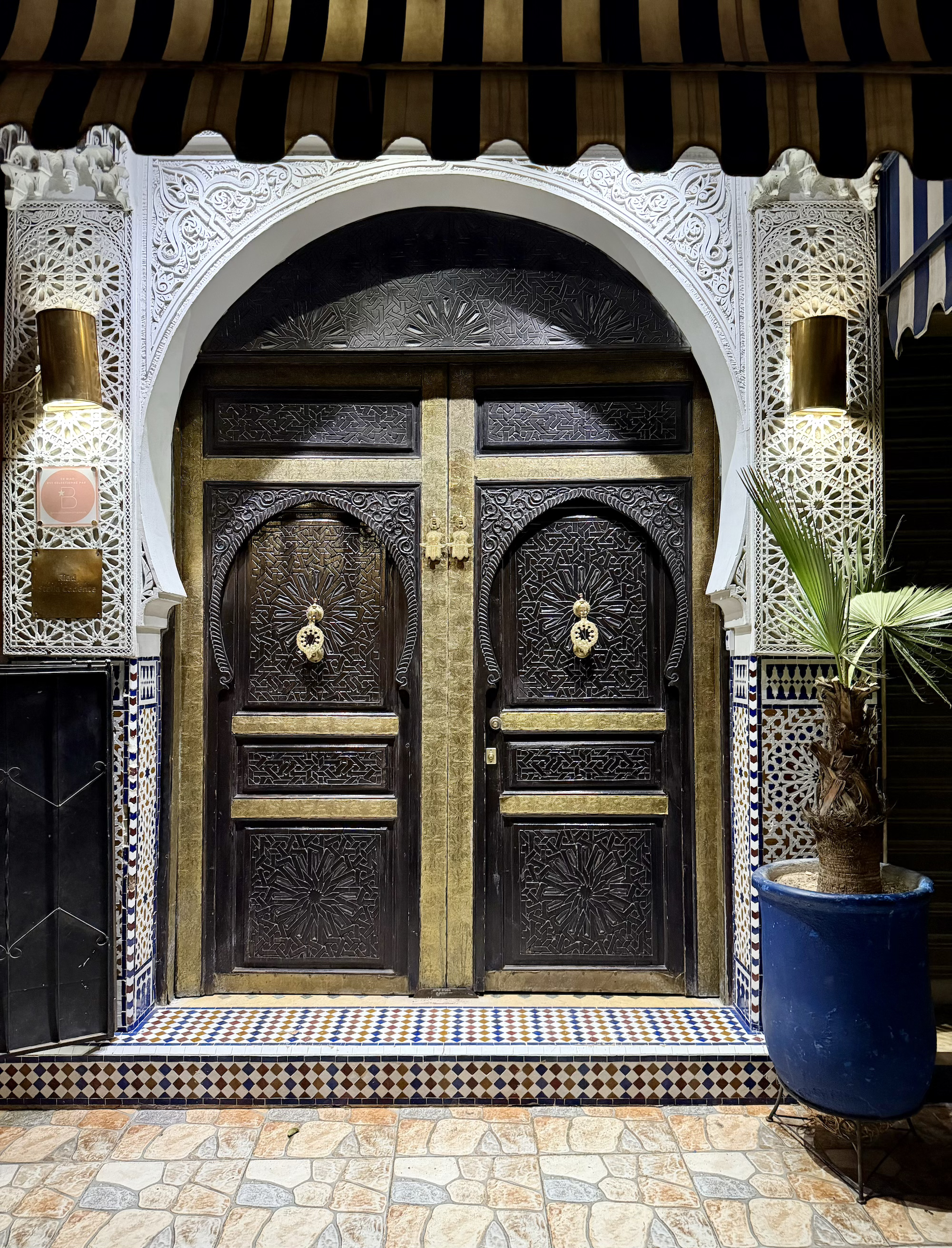
Our riad sat inside a gated community guarded by security, and we felt completely safe and cared for the entire trip. The riad itself was a traditional Moroccan home attached to other homes built around a central courtyard with a Mosque, small grocery and restaurants. The riad was three stories tall and exquisitely decorated. I knew from the photos it would be lovely, but in person it took my, our, breath away. Every surface, floor, wall, and piece of furniture was hand-carved, painted, or tiled. The cost matched a three star hotel in Austin, yet it felt like we were living as kings.
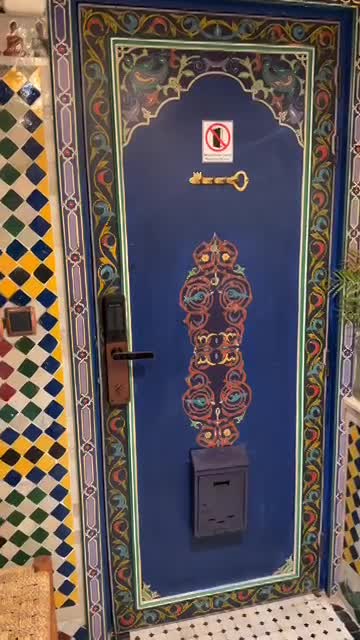
Sleep evaded us that first night, so we walked to the Medina, the old city, for dinner. We also wandered through the world-famous Jemaa el-Fnaa, the main bustling town square and open-air market of Marrakesh. The Medina is encircled by tall red walls made of a mixture of soil, sand, gravel, silt, and clay. It is a totally different world inside the old city. As soon as we walked through the Moorish arch entrance, I thought, "now this is the Marrakesh I had been anticipating."
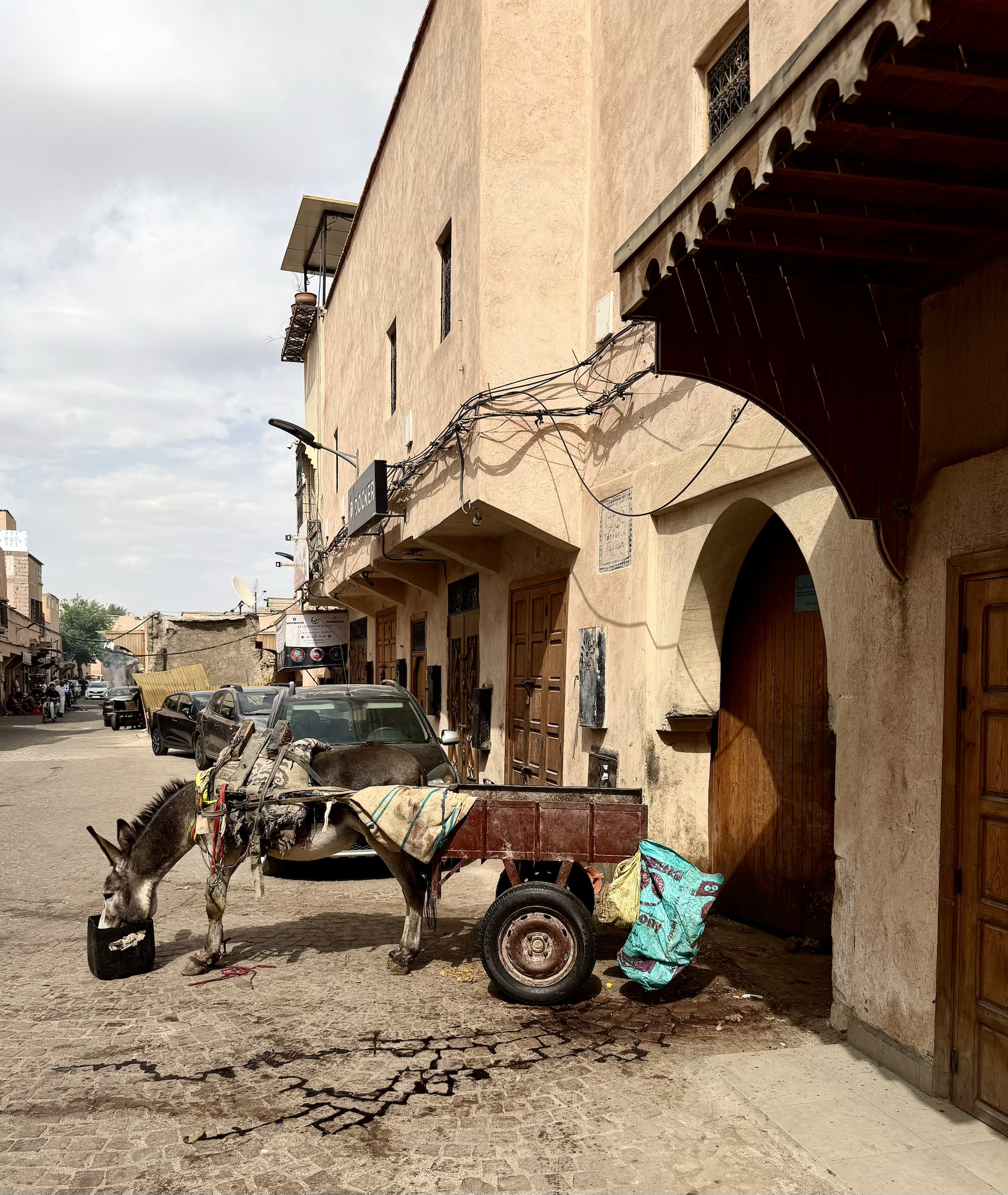
Inside the medina dirty cobblestone paths wind between tightly packed riads and stall-style storefronts. Cars are forbidden inside the medina gates because the roads are simply too narrow and crowded. Many roads were often only eight feet wide, alive with hundreds of people, motor scooters, cats, and makshift tabletop stores all jostling for space. Sometimes the motor scooters would drive through the hoards of people so quickly I wondered how often people get hit, in this old city. I know it must happen. A lot.
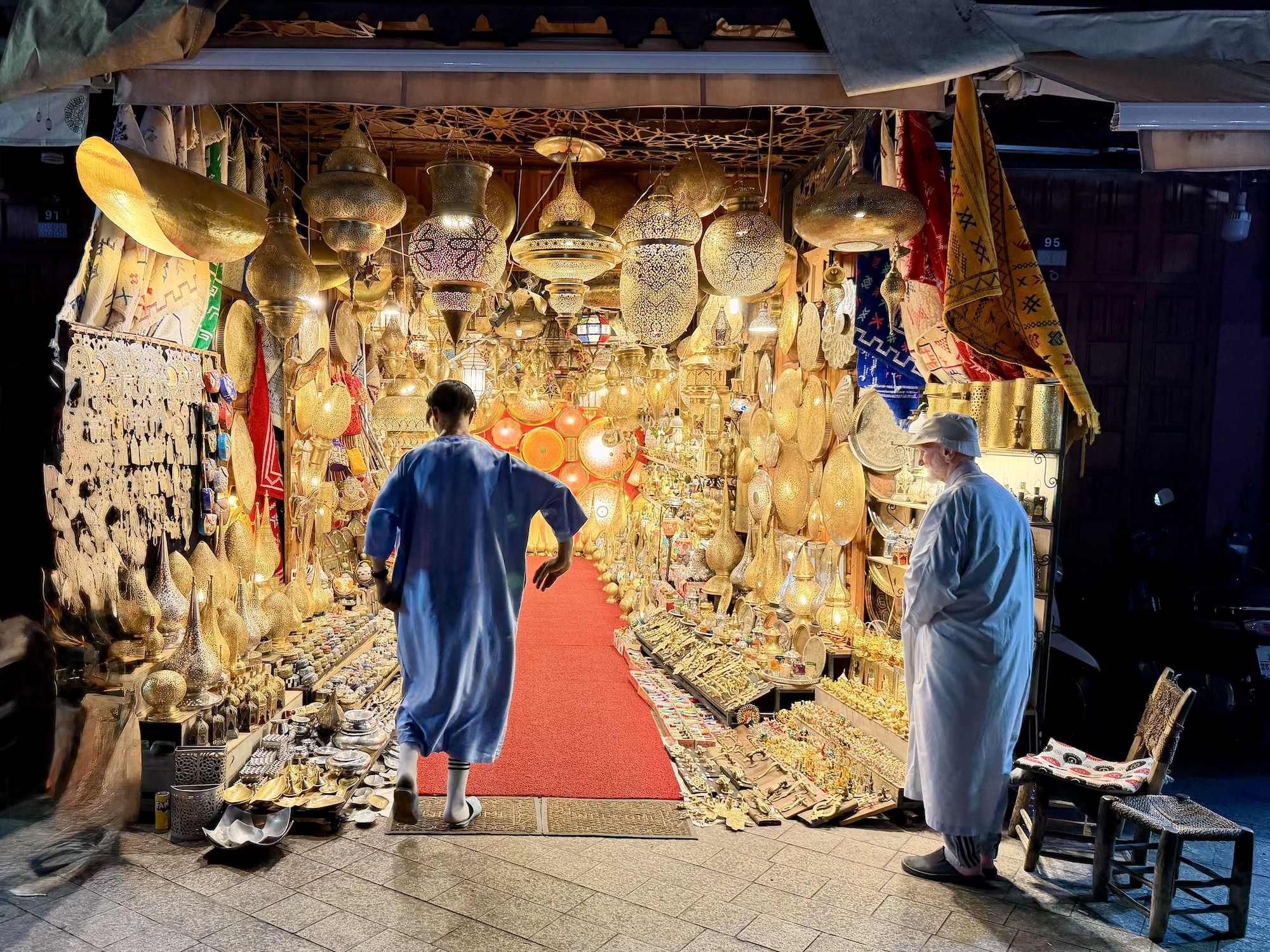
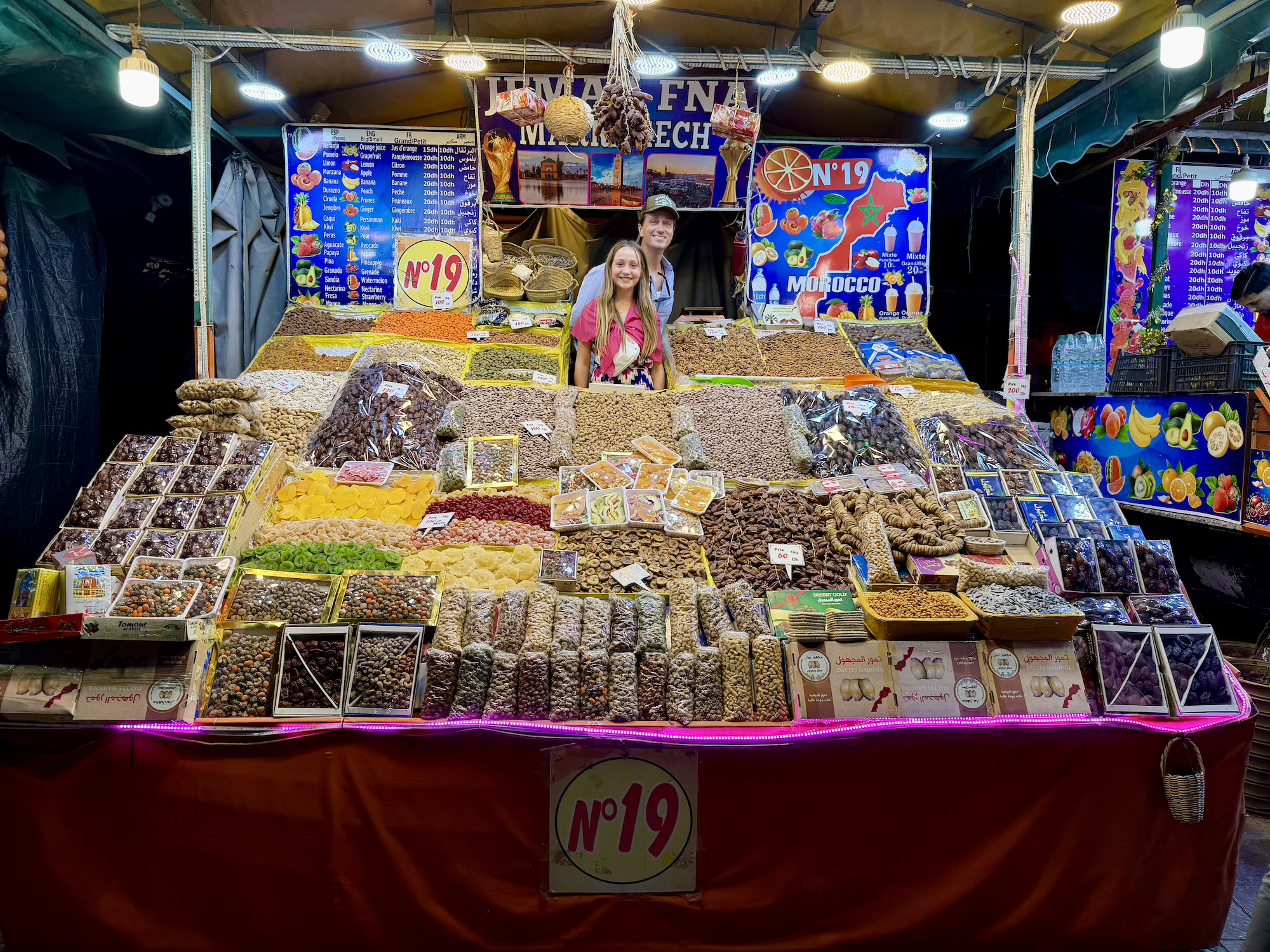
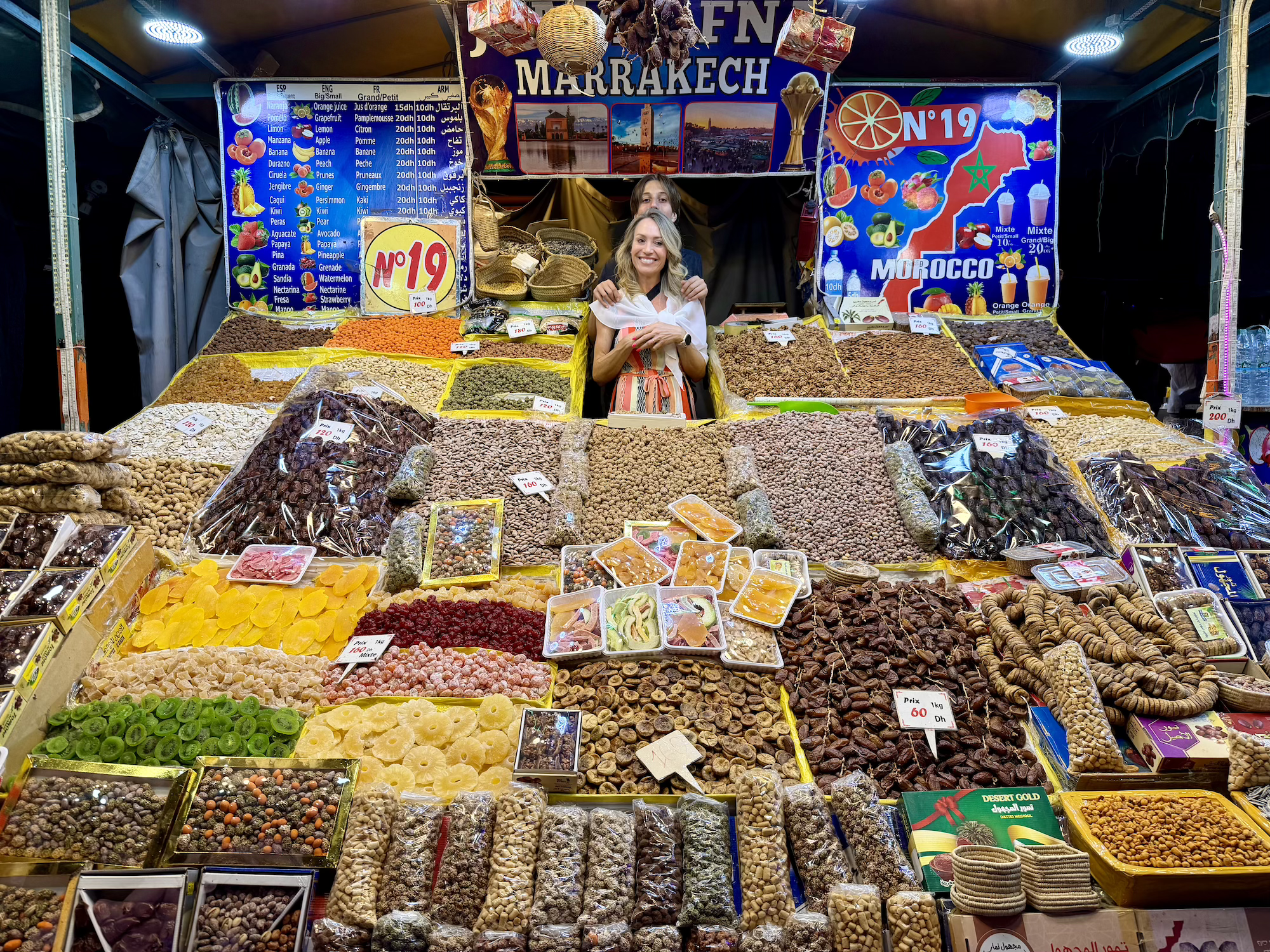
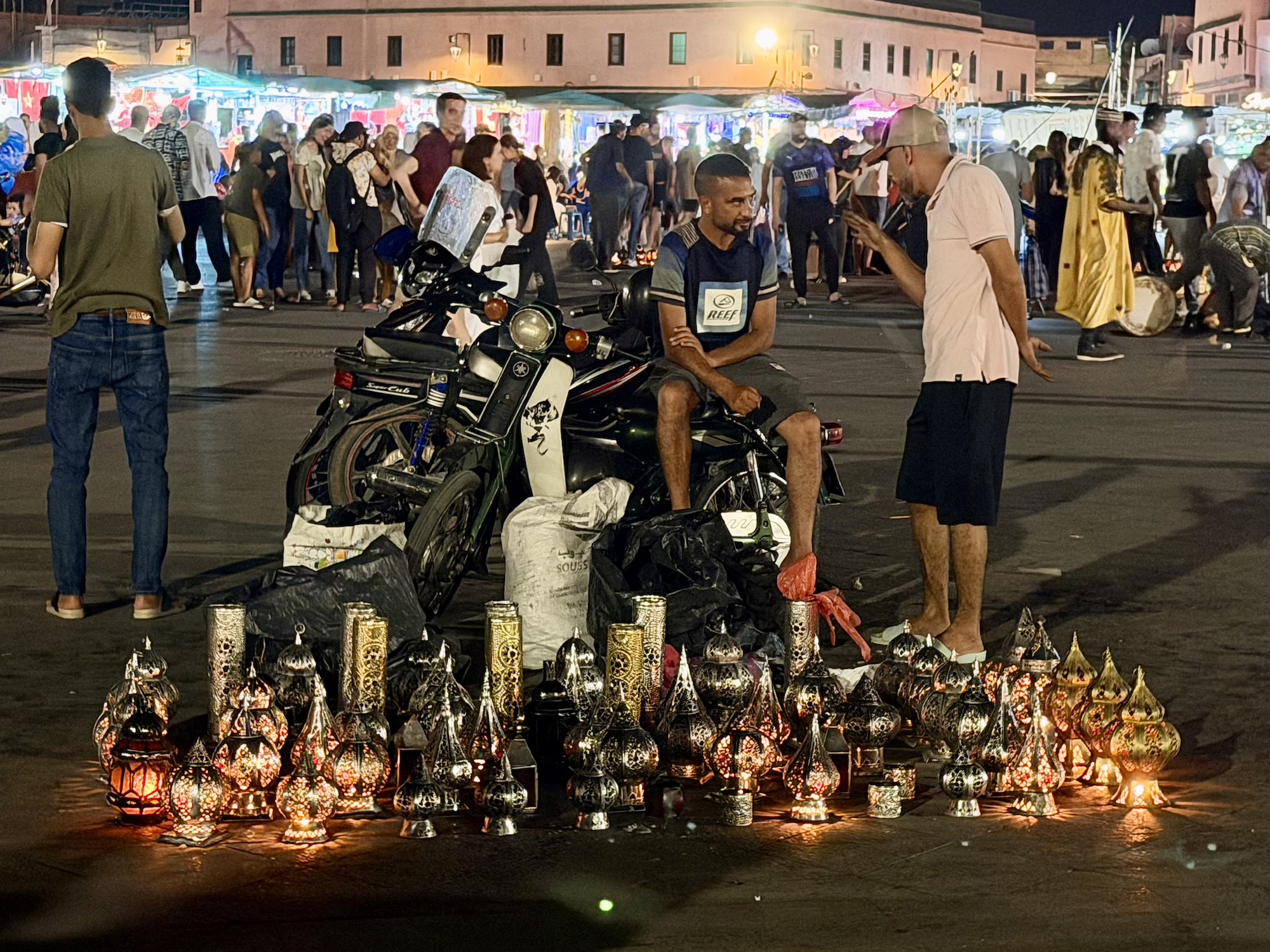
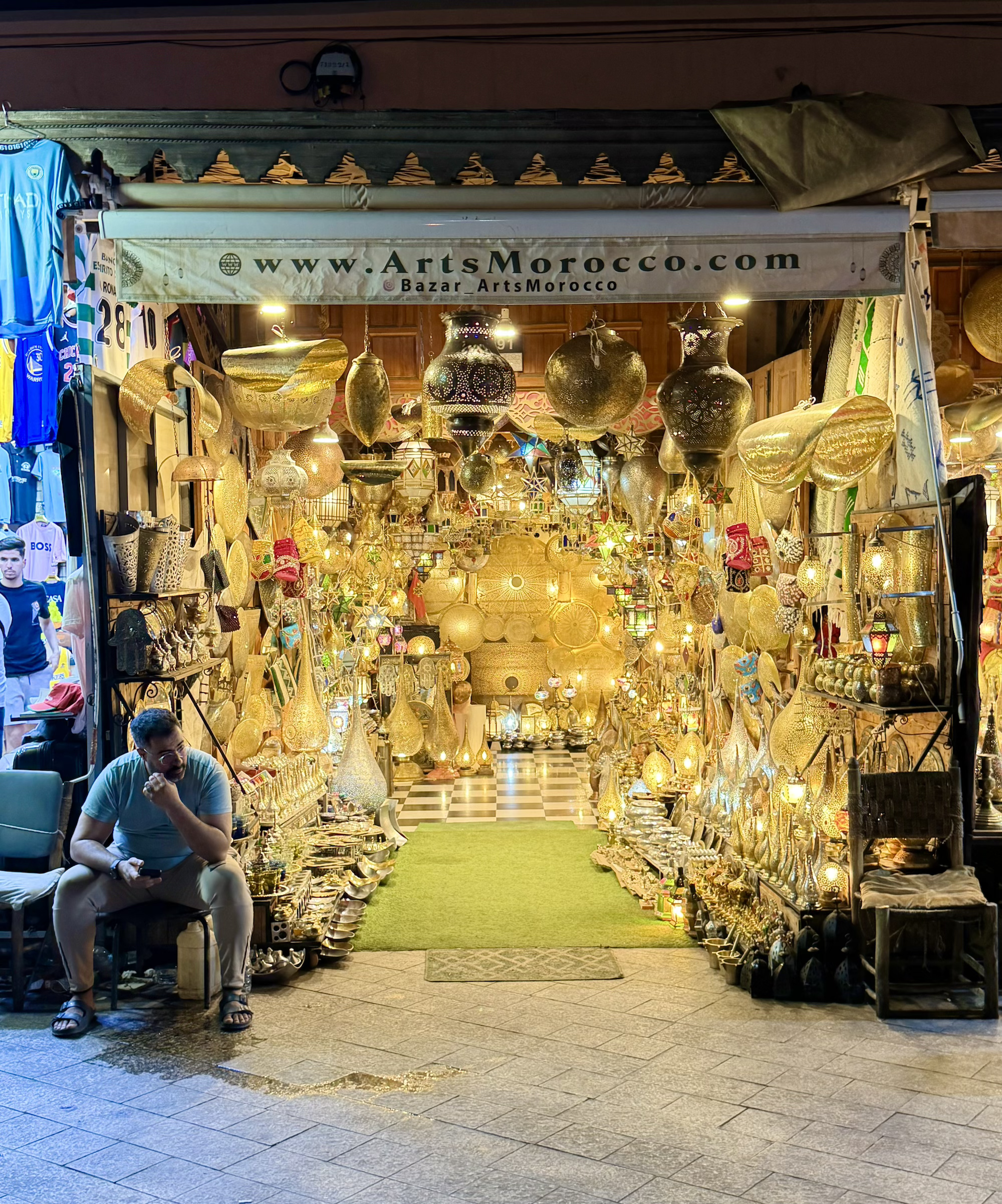
Jemaa el-Fnaa did not disappoint. At night it becomes the city’s beating heart. People gather to eat snail soup from makeshift dining carts, browse fruit and vegetable stands glowing with neon lights, and listen to vendors shouting about their world-famous orange juice, nuts, or dried fruits. The stalls stand shoulder to shoulder, selling nearly identical goods. What separates them isn’t the merchandise but the seller’s charm(?) and their ability to intrigue or repel passersby. We tried a mix of nuts, including almonds rolled in honey and sesame seeds. They were delicious. After we purchased a nut assortment, arranged beautifully in a clear-lidded box, the merchant asked if we would like to man his stand. We took turns playing merchant behind the counter, which could only be reached by a set of metal steps that allowed us to view Jemma-el-Fnaa from above.
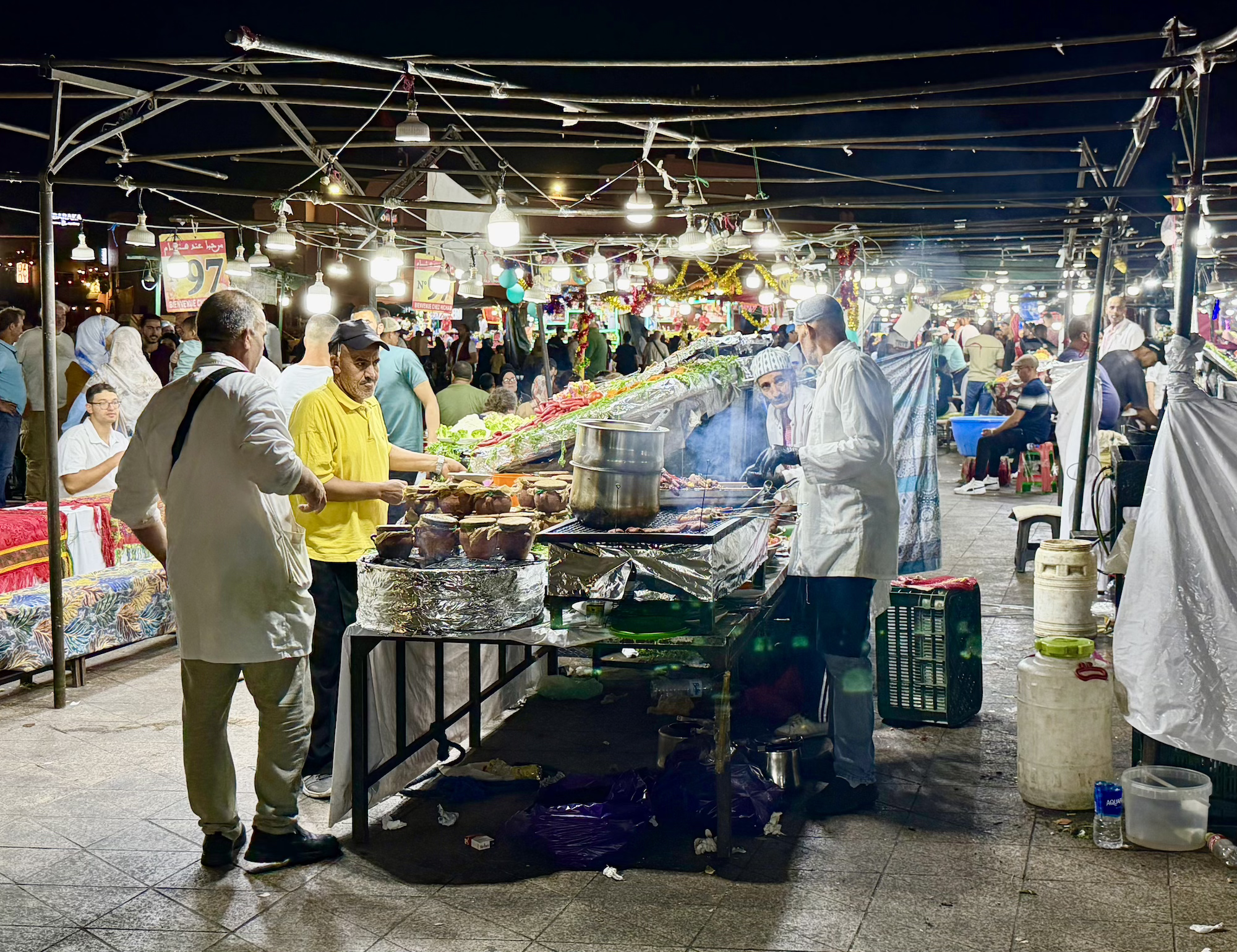
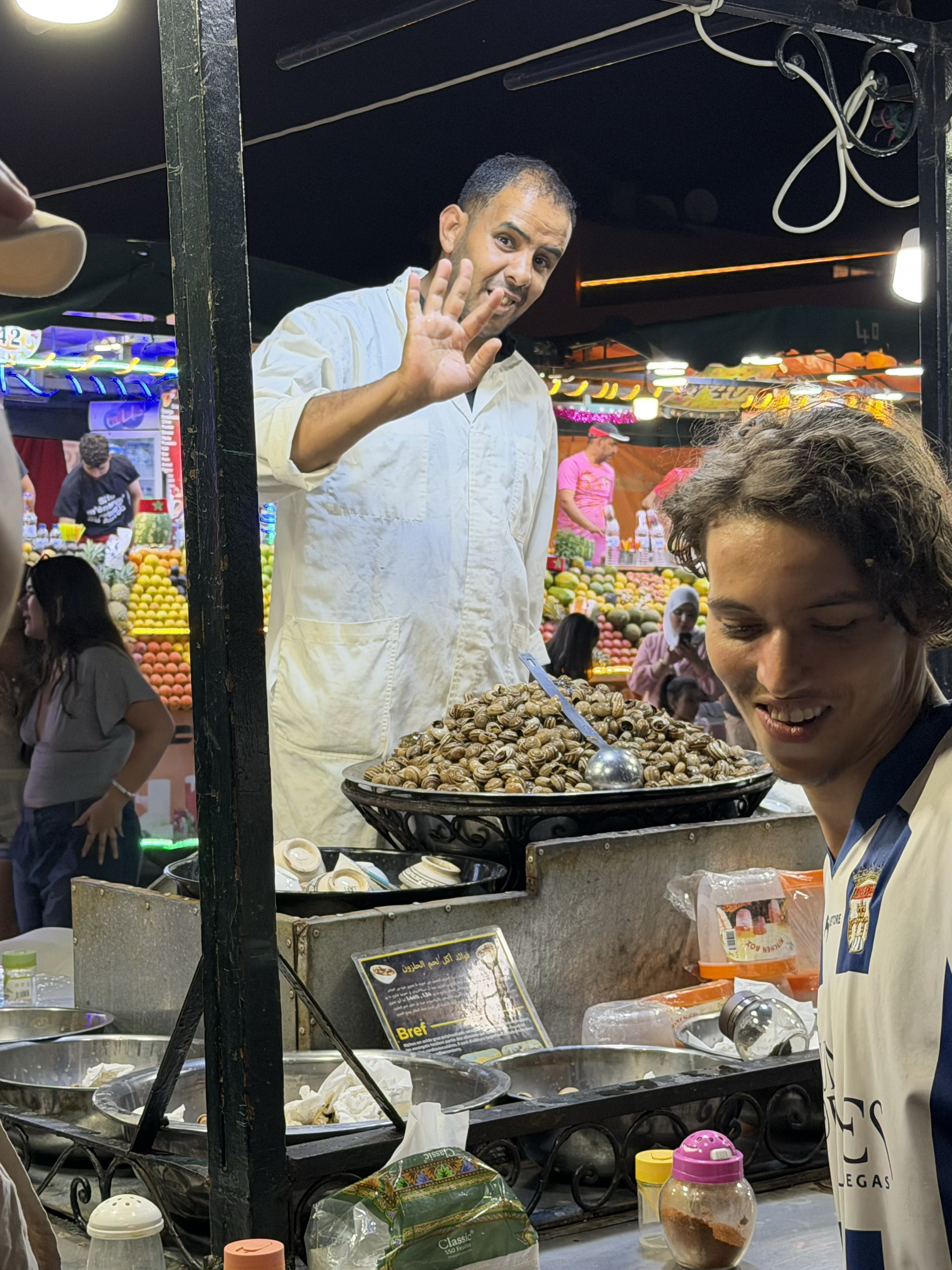
Cooked snails stall in Jemma el Fnaa
We ate at the Grand Bazar, right in the center of the square. We came for the tagines. The word doesn’t name the food itself but the distinctive clay pot it’s cooked in: a shallow bowl base topped with a conical “teepee” lid. Ingredients go inside, the lid traps the steam, and the whole thing sits over a flame. Done right, the flavors concentrate into something Marrakeshi magical, layered with spices we had never tasted before. Back at the riad we still struggled to fall asleep, but when we did, we slept hard. We woke around 10 a.m.,incredibly late for us, but exactly what we needed.
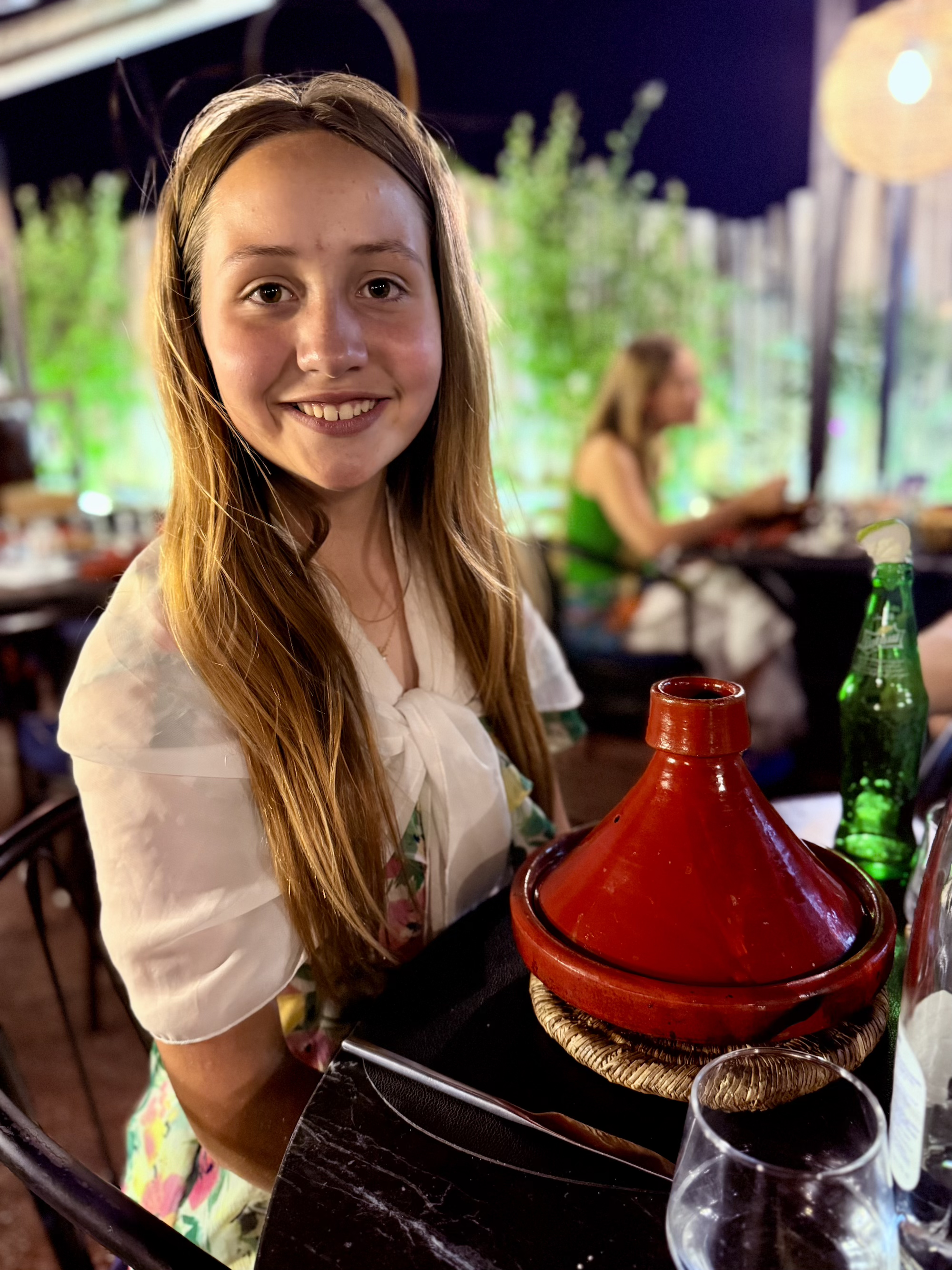
Penny trying her first veggie tagine
The week before our trip, one restaurant messaged that our booking was canceled due to a newly announced holiday. I looked it up: Eid al-Adha, the second most important holiday of the Islamic year. It means “Feast of the Sacrifice." Dates shift with the lunar Islamic calendar, fixed by the sighting of the moon. So, there is a basic timeframe for when the holiday will be, but the date is not set until sometimes days before the event.
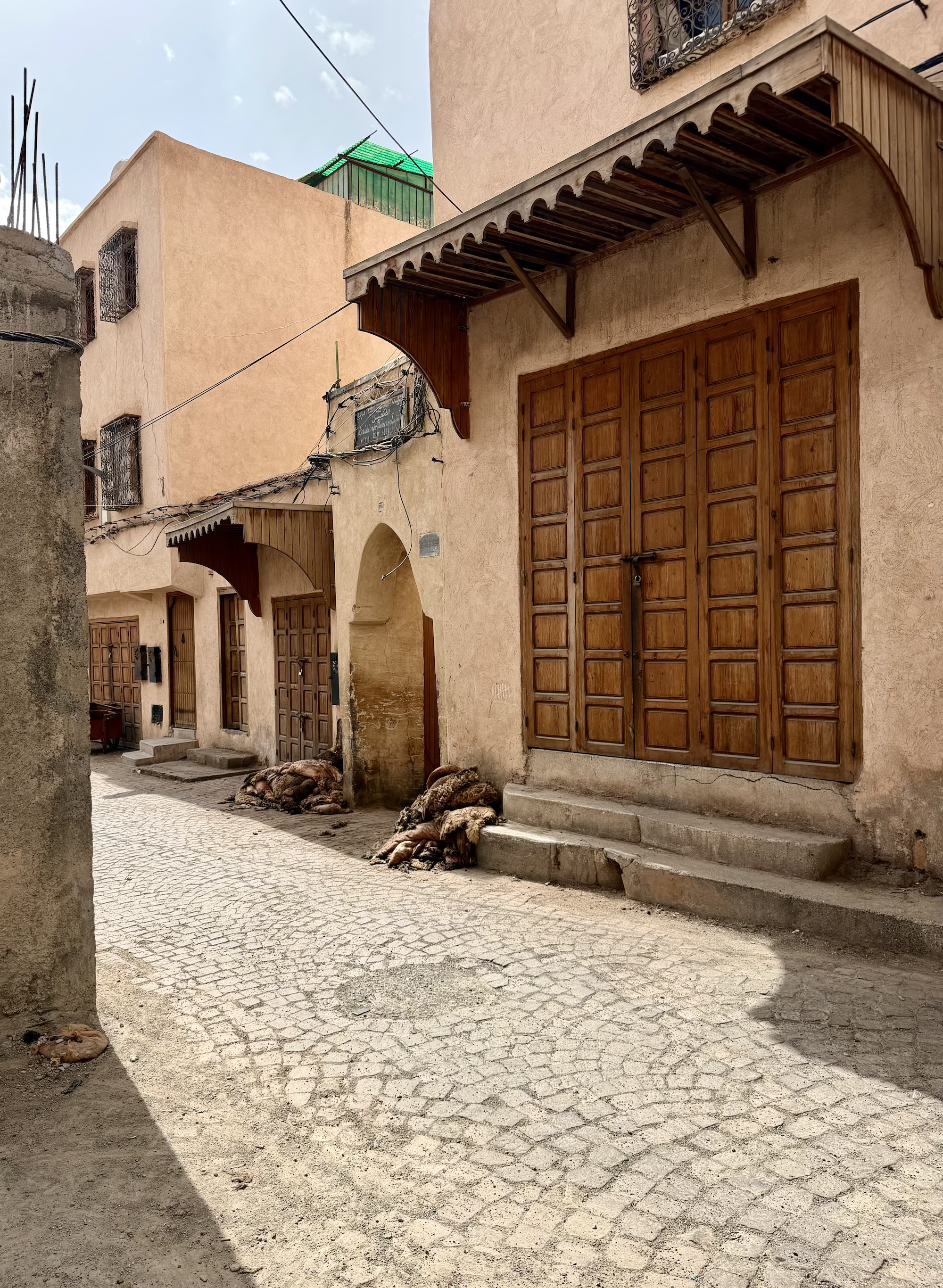
Quick snapshot of homes with sheep skin piled in front;
no photos were to be taken, so I don't have much to show!
During Eid al-Adha families sacrifice an animai, usually a sheep, cow, or goat, and share the meat with relatives, friends, and those in need. In Morocco, celebrations begin the evening before with prayers and last about three days. Research showed that street slaughtering, skinning, and cooking were traditional parts of the festivities. Darrel and I watched a few YouTube videos, worried the kids might be scarred, and decided to prepare them in advance. This would be their first day of experiencing Marrakesh, a day of celebrated slaughter. Yikes.
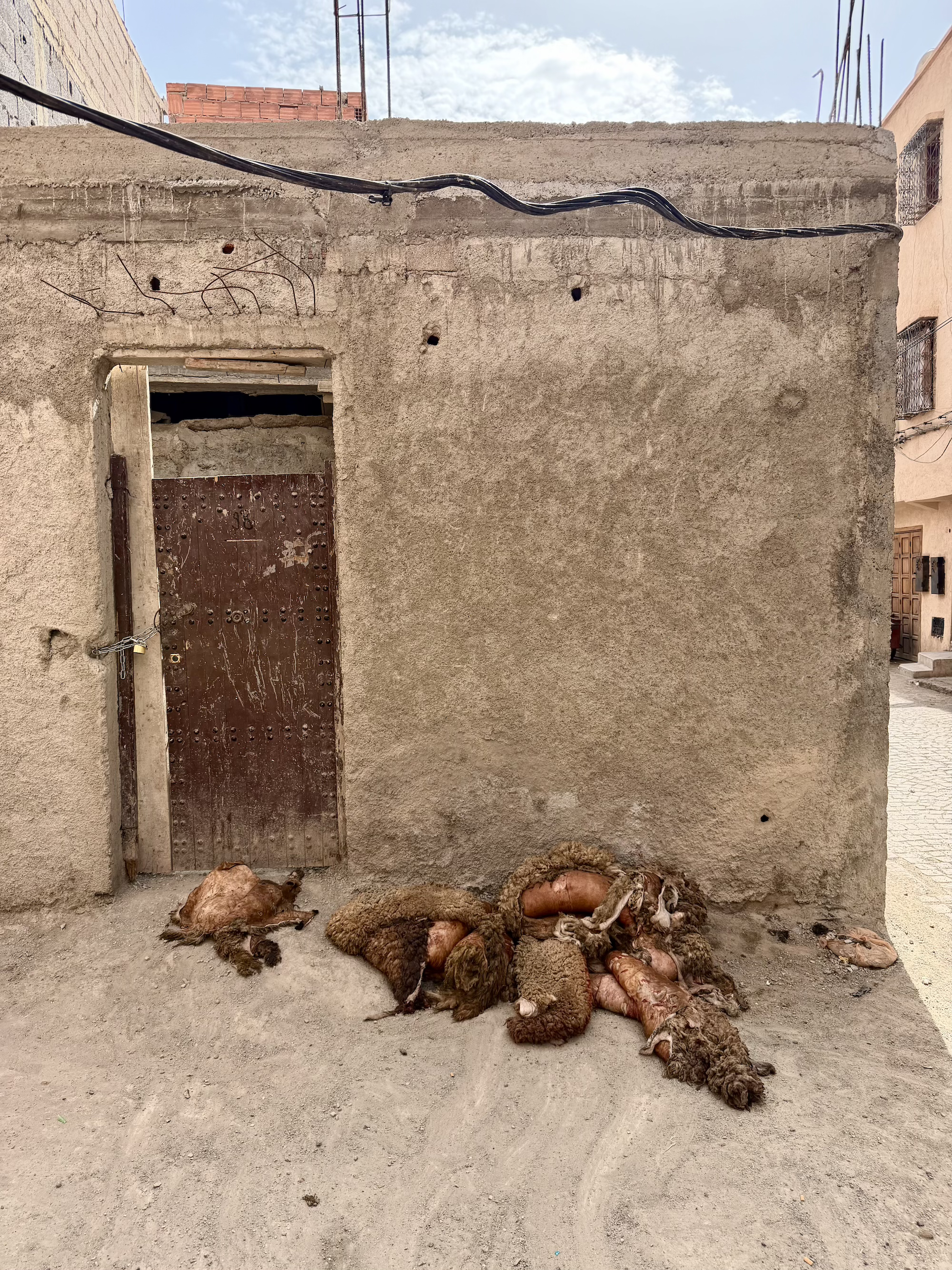
Sheep skins thrown on the doorstep of a riad
We knew most shops, restaurants and sites would be closed that first full day of Eid al-Adha, but we still wanted to explore the city on foot and just see what we could see. The scene shocked us even though we’d done our homework and were mentally prepared. We didn't leave until about 11 am, and by that time the majority of the sacrificial killings were complete. A short, welcomed rain had washed the majority of the blood from the streets. Still, we saw and smelled hundreds of dead, skinned, and disassembled sheep. Fresh skins piled feet high outside doors and on street corners. Sheep heads were carried in buckets or roasted over wood fires on the side of the road. Carcasses were expertly butchered in small street shops and hanging in street stalls and home doorways.
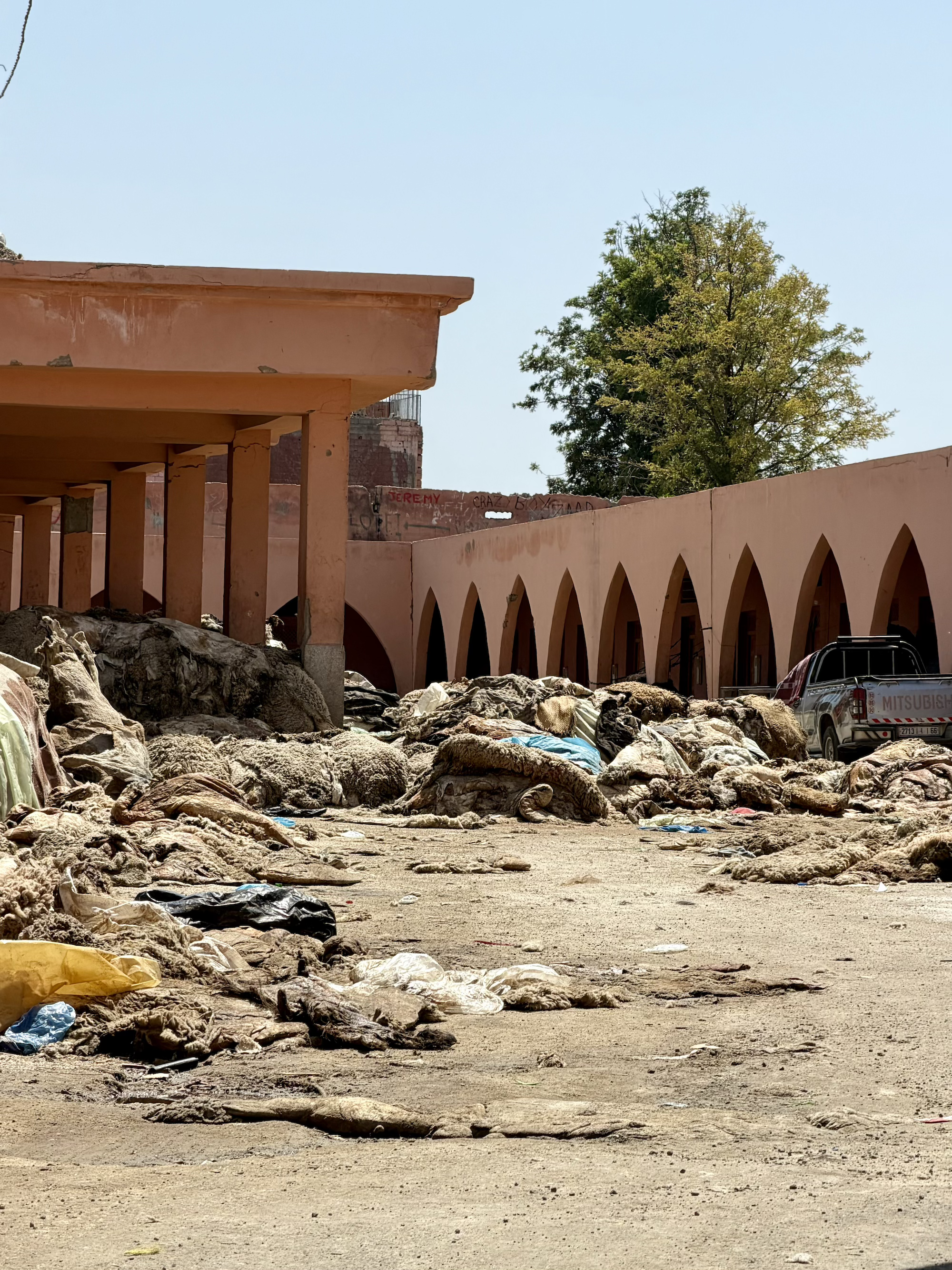
Piles of sheep skins outside of the tannery
The smells and sights overwhelmed us at first. Penny, Finn, and I all felt deeply disturbed. Yet within a day or two the shock softened into curiosity. The sheep appeared well cared for, or at least well fed, beforehand. We learned that the killing is done with a swift, single deep cut. Nothing was wasted. The skins, meat, even heads and horns were all used for food or goods. This was specific to their very sacred holiday, just as Americans slaughter turkeys for Thanksgiving. The main difference is we have someone else do the killing for us.
Our driver, Yazid, shared that he had bought the sheep for his entire extended family. It was clear he was proud of this contribution. He explained that quality animals can cost up to $500 USD, which is an enormous sum for many traditional Moroccan households. (The national average gross monthly salary is around 6,000 MAD or $610 USD.) The animals must meet strict age and quality standards. The meat is divided three ways: the family keeps one third, another goes to relatives and friends, and the last to the poor. Yazid's family hired a professional butcher, then the whole family including his parents, grandparents, siblings, aunts, and uncles gathered to pray, cook, eat, and socialize. Leftovers went to those less fortunate.
In Muslim tradition, the sacrifice honors Prophet Ibrahim’s (Abraham’s) willingness to obey God by sacrificing his son. At the last moment, God provided a ram instead. Sharing the meat draws one closer to Allah. As an animal-loving pescatarian, it was hard to witness. Yet I was strangely glad we experienced Eid al-Adha in Marrakesh. The city quieted without its usual traffic and bustle, giving us space to walk and absorb a living tradition the first few days we were there. Because it is a sacred event, I took almost no photos of people or the rituals. I tried once but was quickly scolded.
The Muslim faith pulses through daily life here. Calls to prayer echo from mosque towers five times a day, starting around 5 a.m. The sound was sometimes garble from a megaphone, but I found it to be beautiful, not intrusive. Men in long robes and hats walk slowly to the mosques, sometimes hand in hand. Younger women often cover shoulders and knees; older generations and stricter sects dress more conservatively, with some covering everything but their eyes.
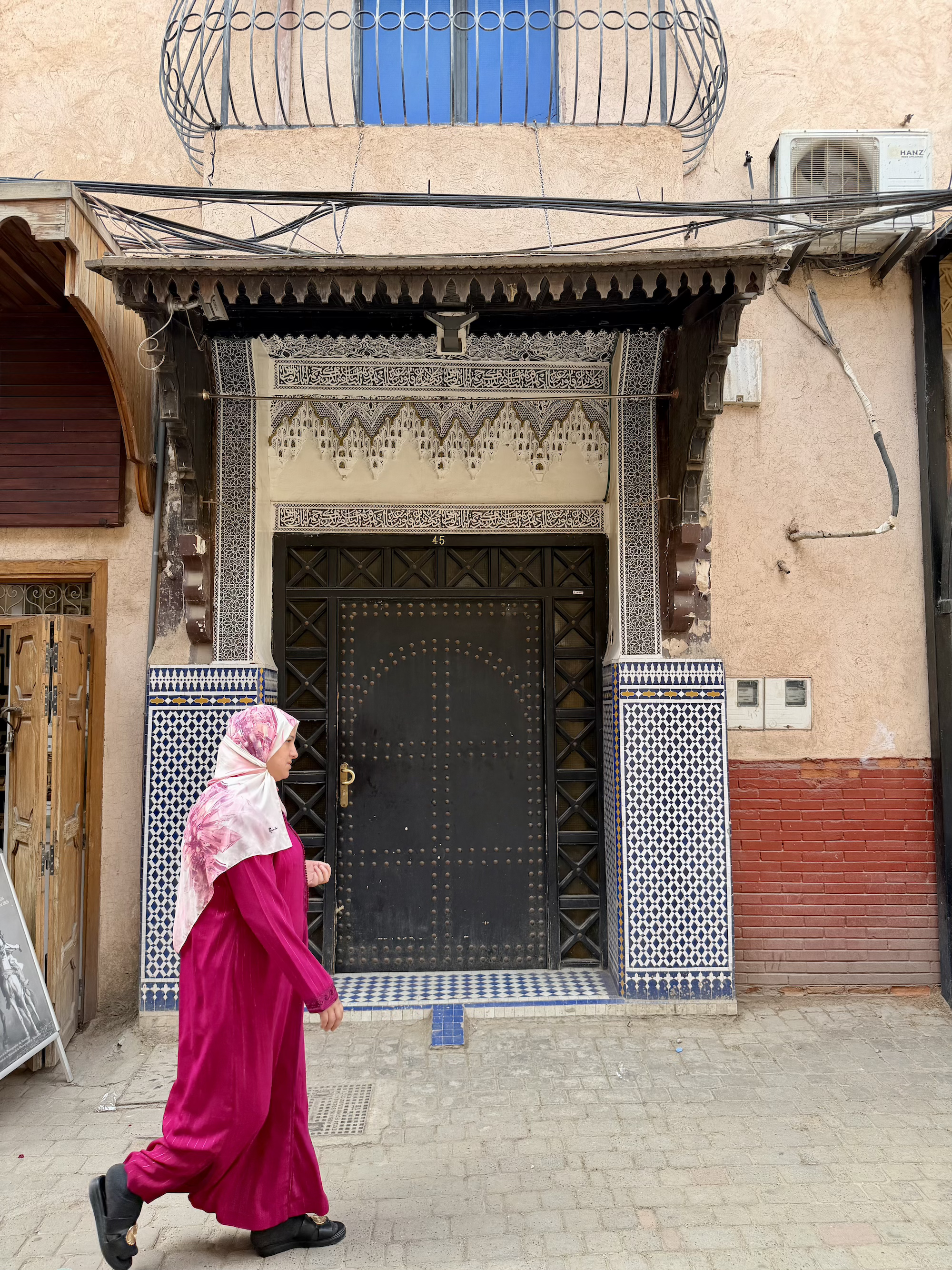
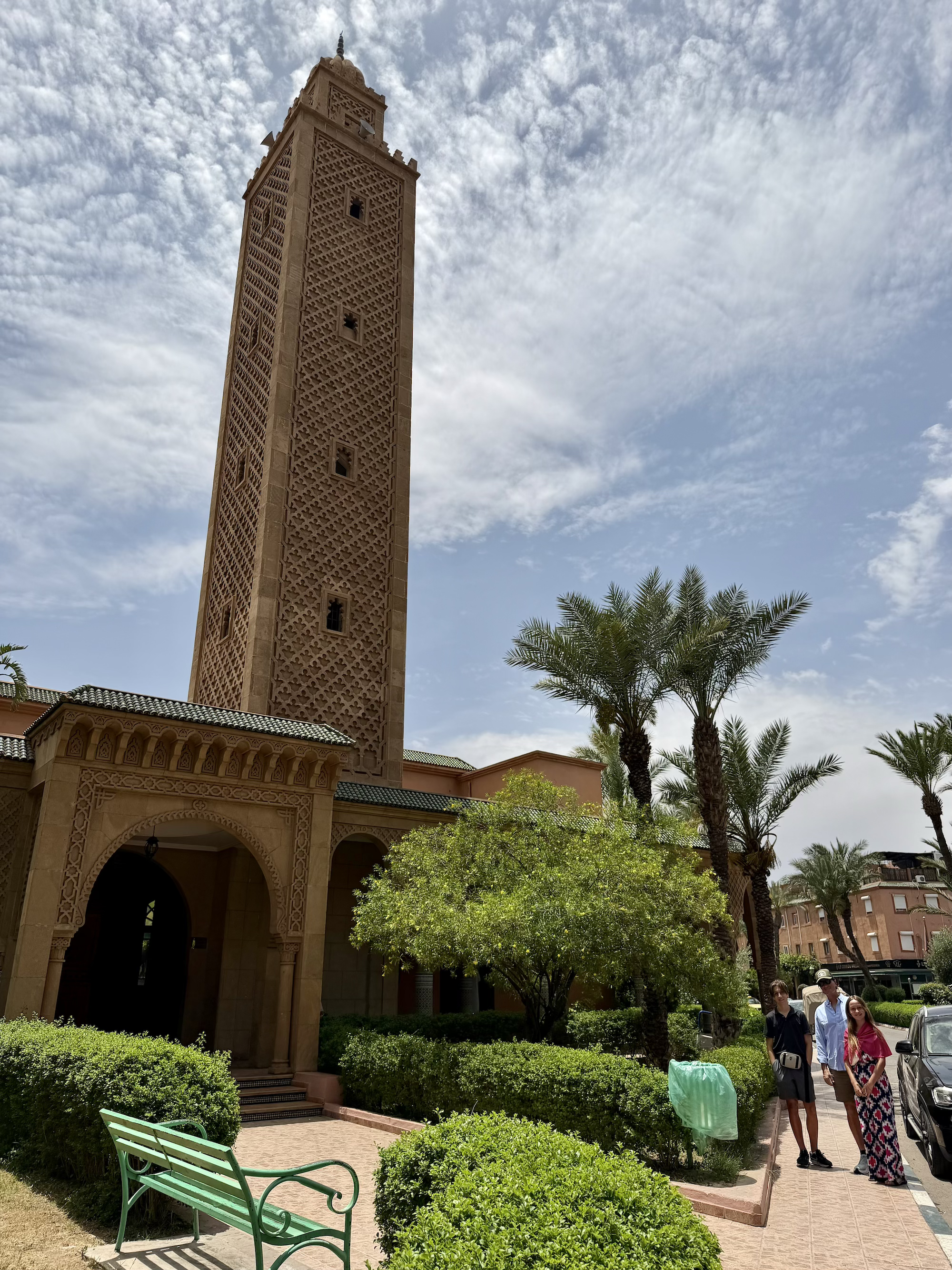
Our neighborhood Mosque
As an American woman from a non-religious family, I don’t pretend to grasp it all. But I see the beauty, complexity and the profound importance of family, Allah, and tradition to the Moroccan people. It feels lovely in its own way. The kids found parts harder to understand. Penny bristled at what seemed like sexism. Finn felt outraged and disgusted by the slaughter. With time and more experiences like this, I hope their minds keep opening. I still struggle with some of their same feelings, so I cannot expect total non-judegment from an 11 and 13 year old. That is, however, my own personal goal. I try my very best at reserving judgement on different cultures. I do not know what it is like to be a Muslim or Morocan, and I love seeing the different worlds and traditions in action.
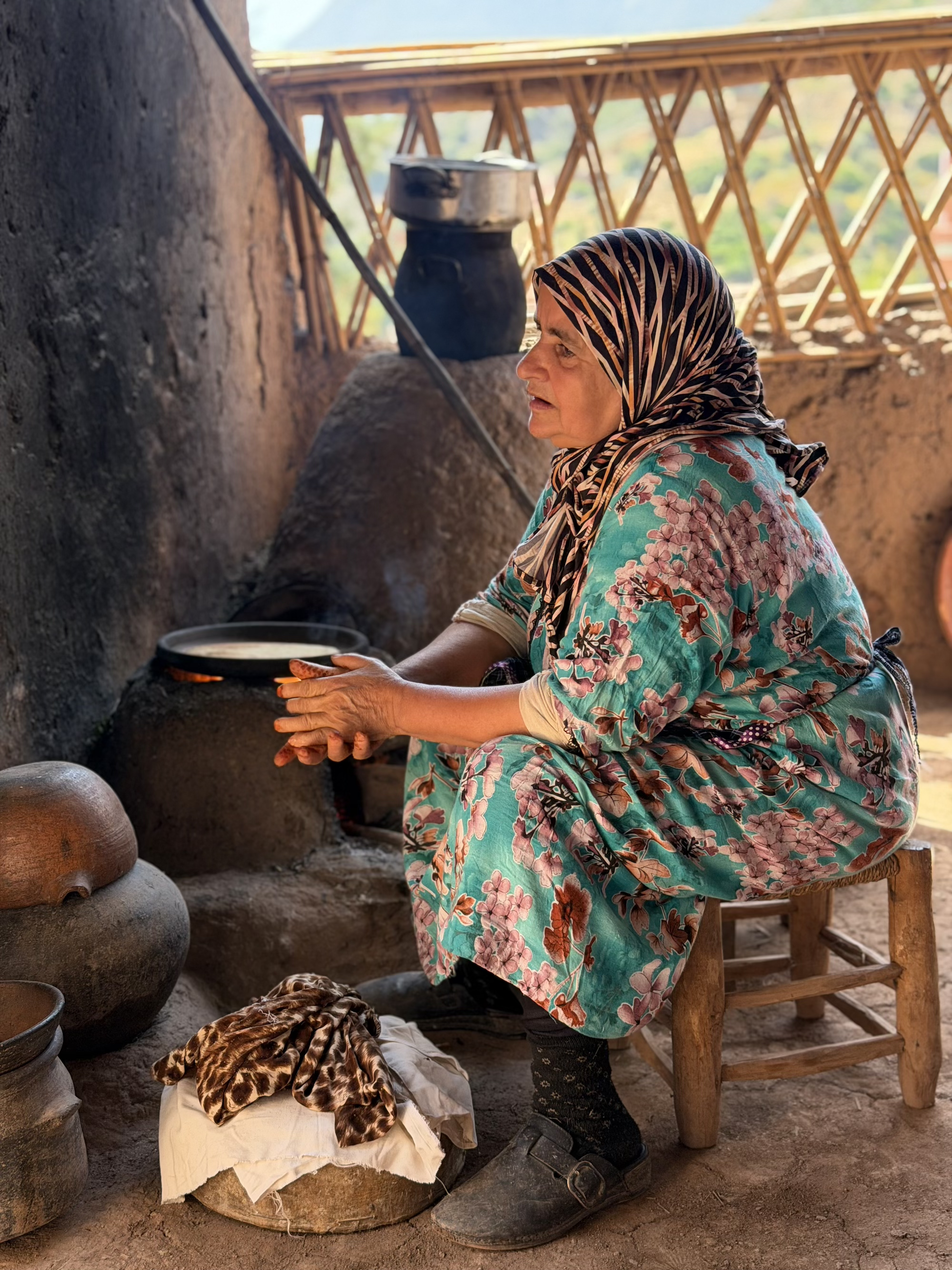
Berber grandmother baking over her fire stove
Each day overflowed with unique moments, but a few stand out. Simply walking the Medina was a full sensory assault with heady smells, colliding sounds, brilliant colors, and constant near-misses with scooters that kept us sharply alert. It was exhausting. It was overwhelming. I loved it.
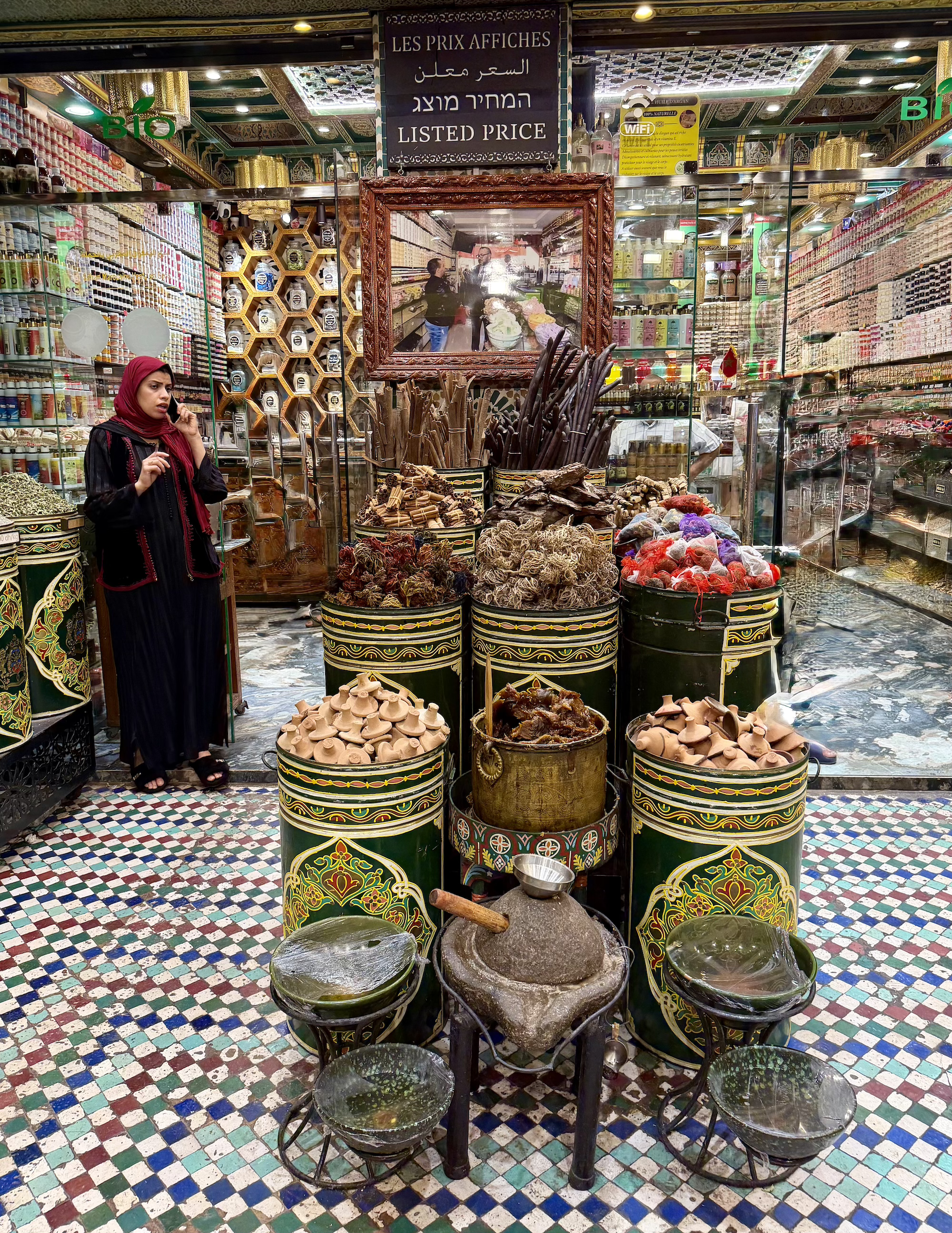
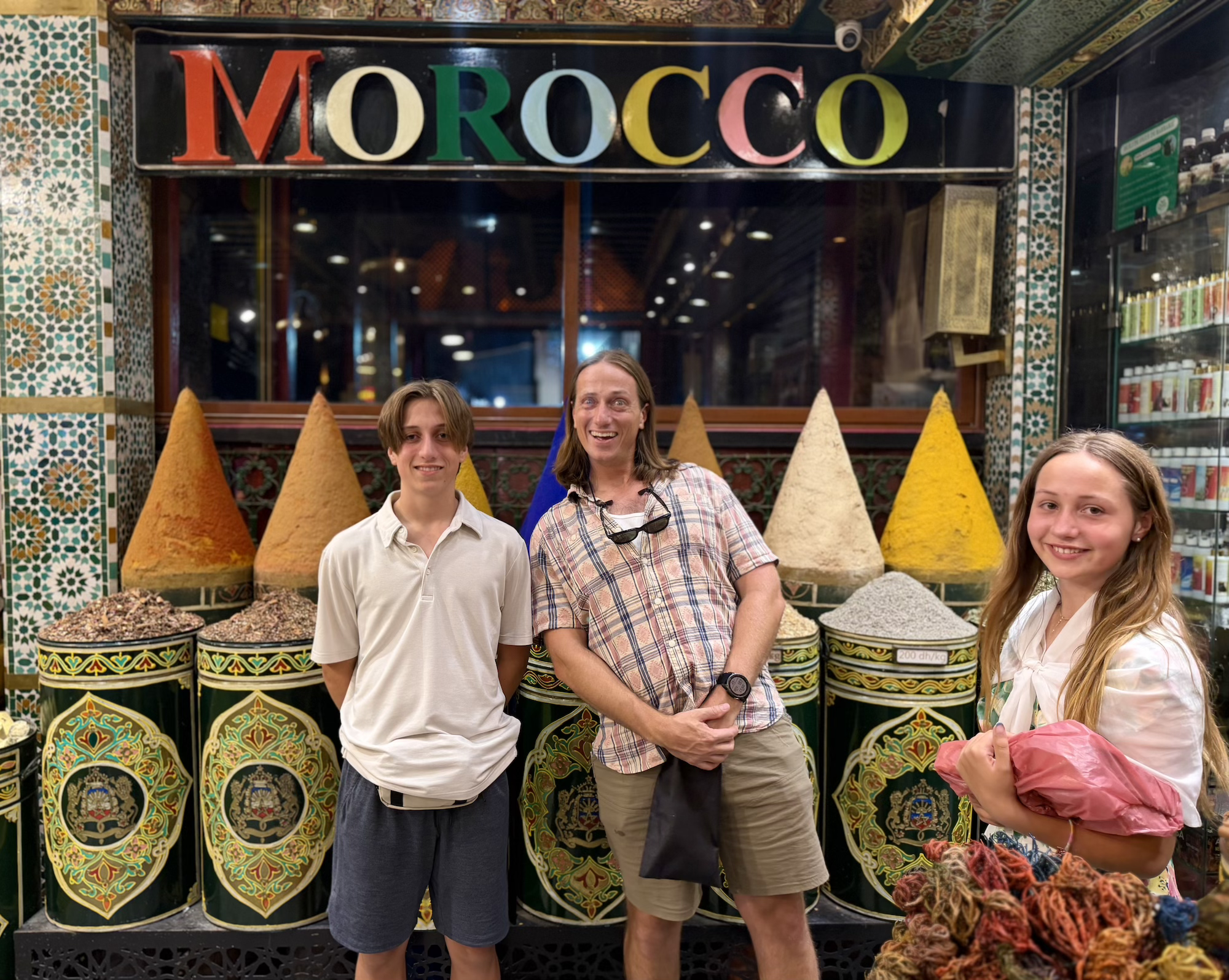
The heat didn’t help. Many days climbed into the high nineties; one reached 105. Even this Texan felt it. Jet lag and all those miles left us happily spent by evening. Other highlights included El Jardin Secret, Majorelle Garden, and Anima Gardens. Rooftop tagines. Traditional hammam scrubs that left us glowing. The Ourika Valley tour, where Atlas Mountains meet the Agafay desert, followed by lunch on colorful pillows beside a roaring river. The breathtaking mosaics at Ben Youssef. Glasses of hot Moroccan mint tea at every hour. Spice markets exploding with impossible colors. A visit to a Berber/Amazigh home. Camel rides in the desert. I will write more on Marrakesh as time allows. What I hope I translated is how much I loved this chaotic and vibrant city for the people, the traditions and the vast difference in culture. This is exactly why I love to travel. You can't experience Marrakesh from a one-sided YouTube video. You have to walk the Medina and smell blood in the streets for yourself.