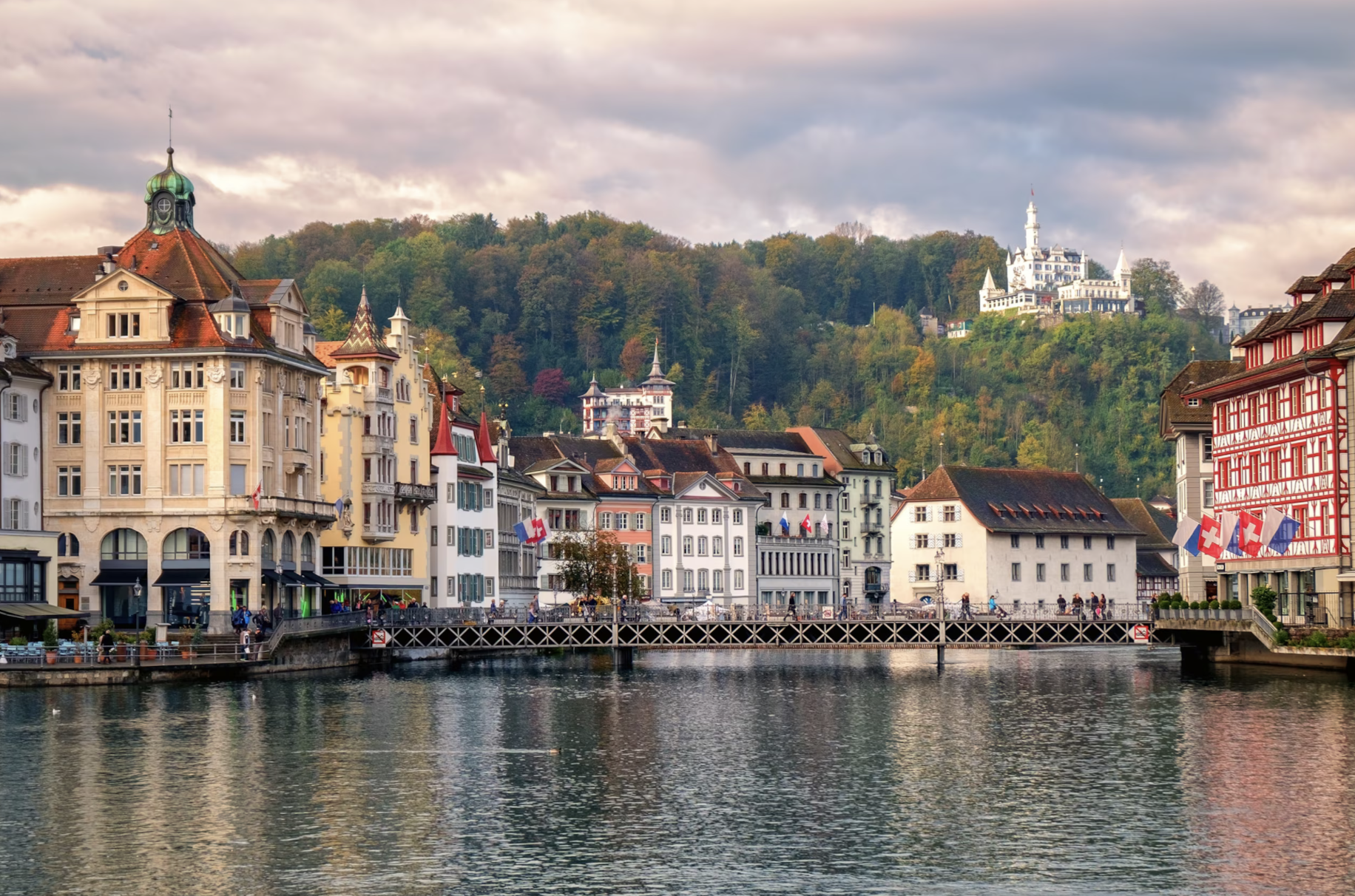
Lucerne, Switzerland
We're heading to Lucerne because my step-dad, Mark, says it is the most beautiful place he has ever been. From the photos we have seen, we can understand why. Mark has pristine taste. After many previous stops that will most likely assult our senses (in a wonderful way) Switzerland is supposed to hit our reset button. I've read that it is clean, impossibly pretty, and probably the only spot in Europe where the trains run on time. I also read one traveler's comment that the swans don't look like they are judging you at Lake Lucerne! I'll believe it w
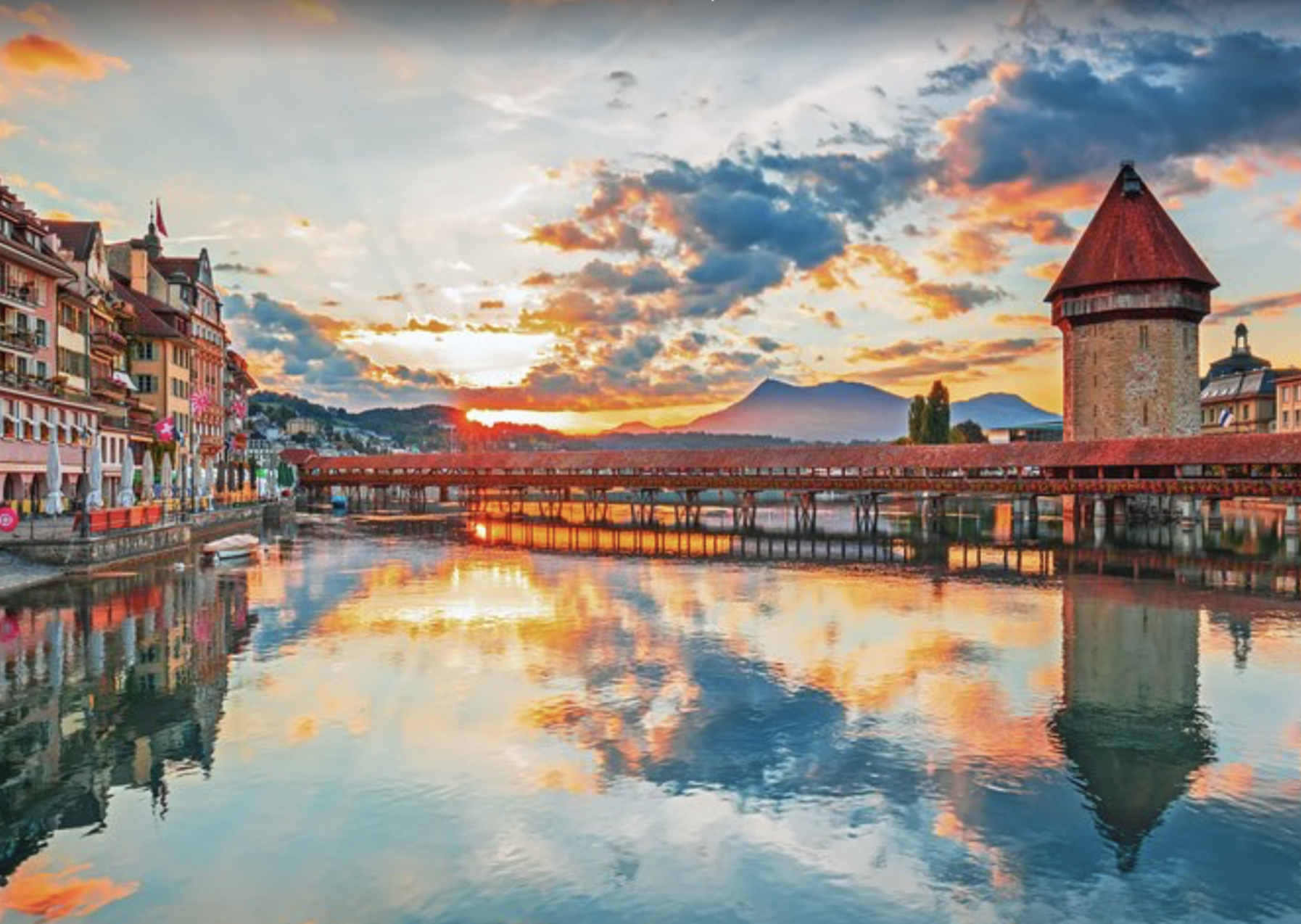
The town of Lucerne sits on Lake Lucerne with medieval buildings in Easter egg colors. Lucerne started as a small settlement around a Benedictine monastery dedicated to St. Leodegar. The monastery was founded in the 8th century, and the name "Lucerne" first appears in records from around 840 AD. It likely comes from the monastery or an old word meaning something like "place of light."
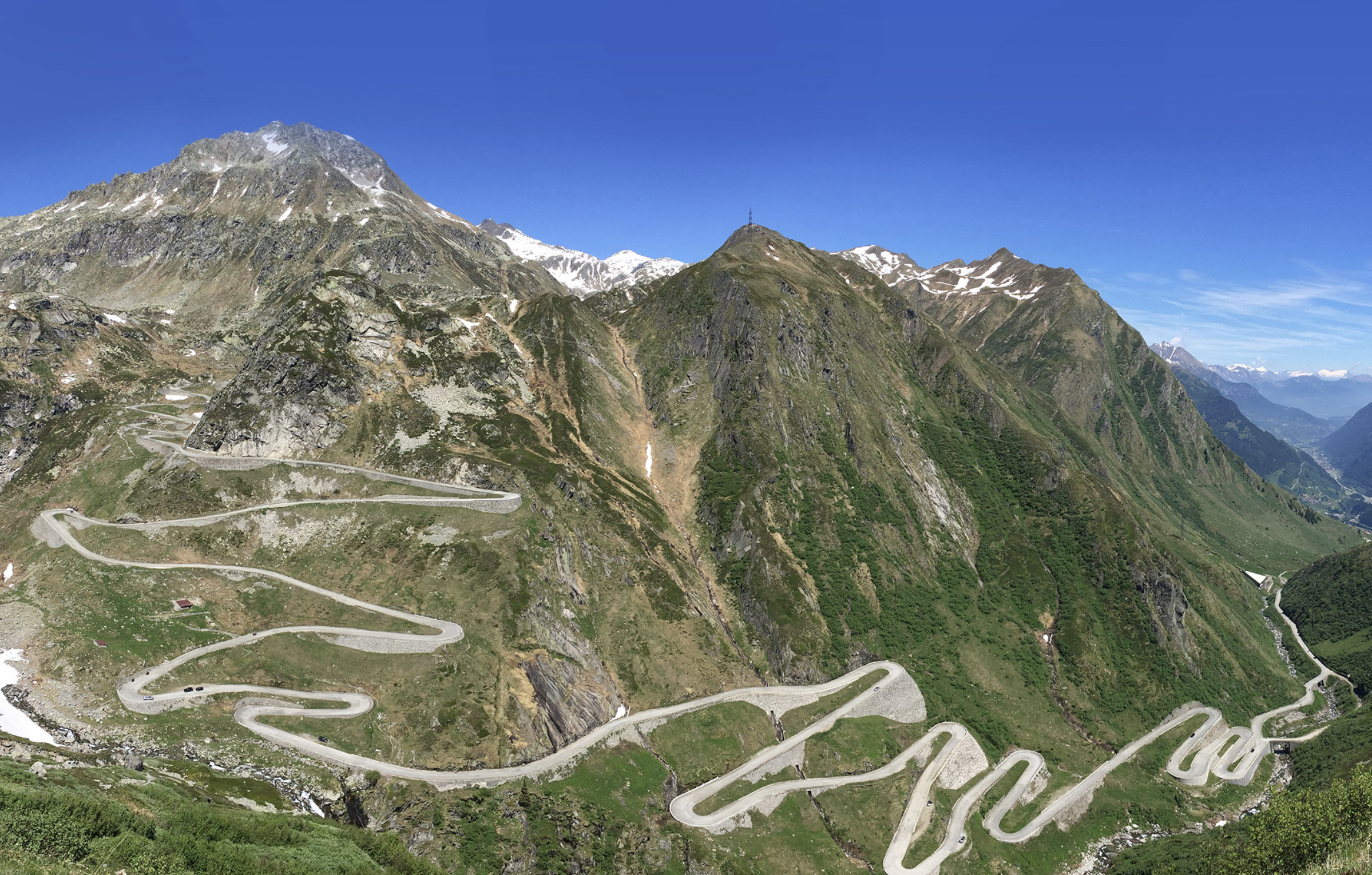
Over time, a fishing village grew next to the monastery on the Reuss River where it flows out of Lake Lucerne. The big turning point came in the late 12th century. In 1178, the town gained independence from the monastery and was officially founded as a city. Its location on the important St. Gotthard Pass trade route, connecting northern Europe to Italy, helped it grow quickly as a market town. In 1291, the Habsburgs bought Lucerne, which the locals weren't happy about. This tension led Lucerne to join the alliance of the three forest cantons Uri, Schwyz, and Unterwalden in 1332. This made Lucerne the fourth member of what would become the Swiss Confederation.
The city played a key role in breaking free from Habsburg control, especially after winning the Battle of Sempach in 1386. After that, Lucerne expanded its territory and became one of the stronger cities in the early Swiss Confederation. During the Reformation in the 1500s, Lucerne stayed strongly Catholic while many other Swiss areas turned Protestant. It became a leading Catholic city in Switzerland, sometimes called the "Rome of Switzerland," and was home to the Pope's ambassador.
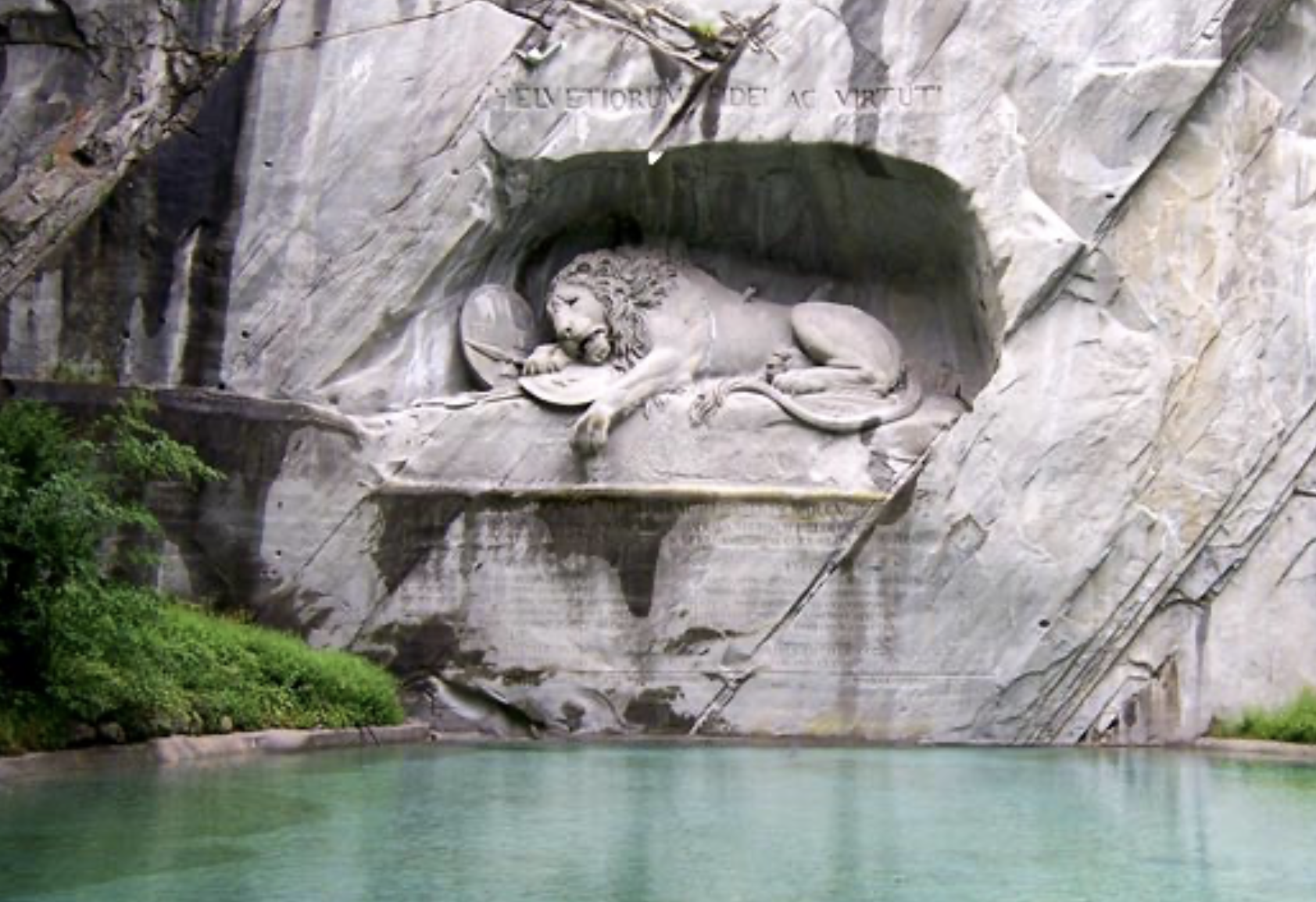
In the late 18th and 19th centuries, Lucerne went through big changes. It was briefly the capital of the Helvetic Republic under Napoleon. The famous Lion Monument was carved in 1820–21 to honor the Swiss Guards who died defending the French king in the French Revolution of 1792. In the 19th century, tourism took off thanks to its beautiful lake and mountain setting. Lucerne grew into the charming, well-preserved city with medieval bridges and historic buildings still standing.
DRAGONS, YOU SAY?
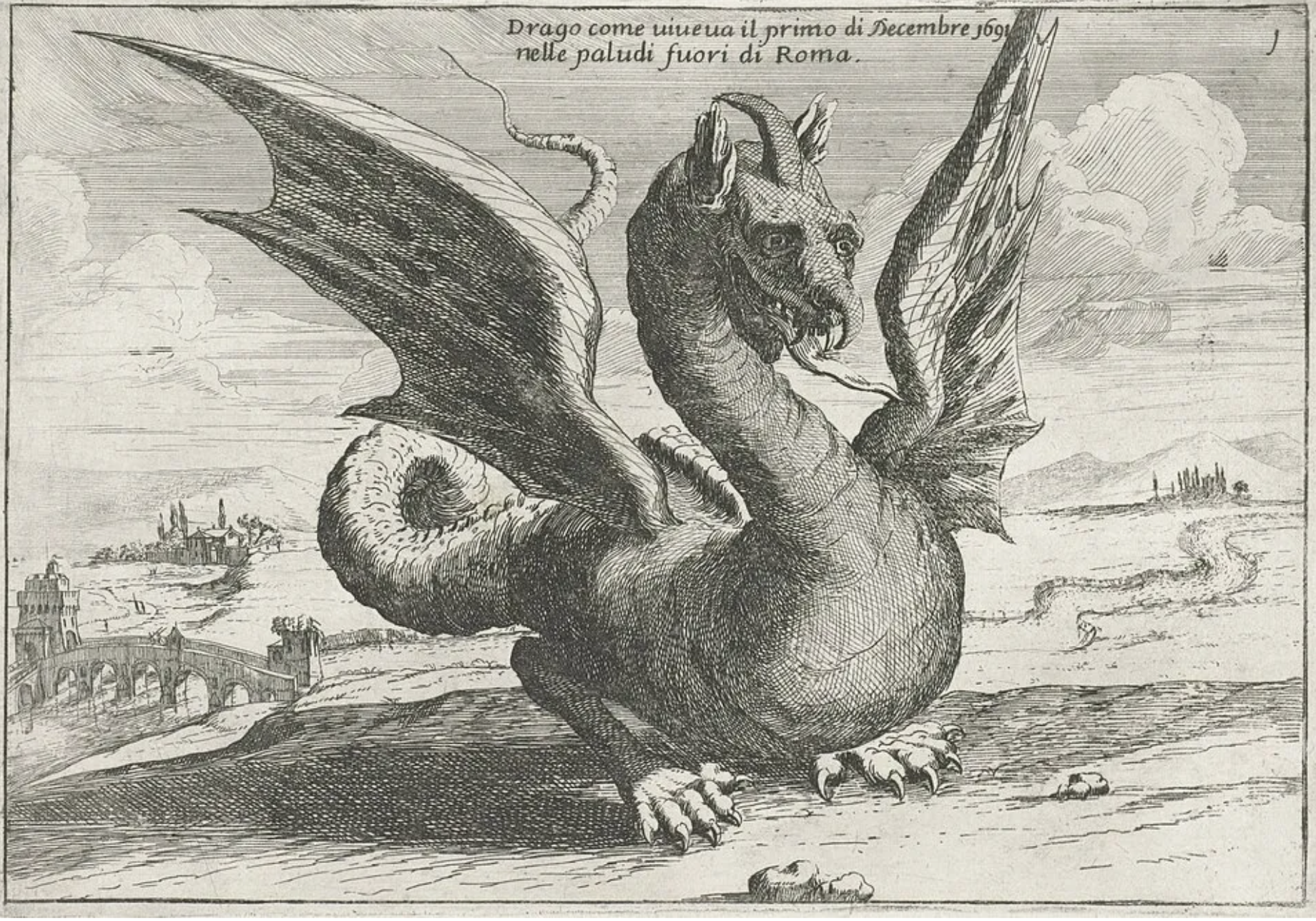
One of the wildest things about Lucerne is its long-standing obsession with dragons on nearby Mount Pilatus. For centuries, locals truly believed dragons lived up in the mountains. Old stories tell of farmers spotting dragons flying between peaks, a dead dragon supposedly washing up in the river in Lucerne, and even a man who fell into a crevice, got rescued by dragons, spent the winter in their cave being fed by them, and was released in the spring.
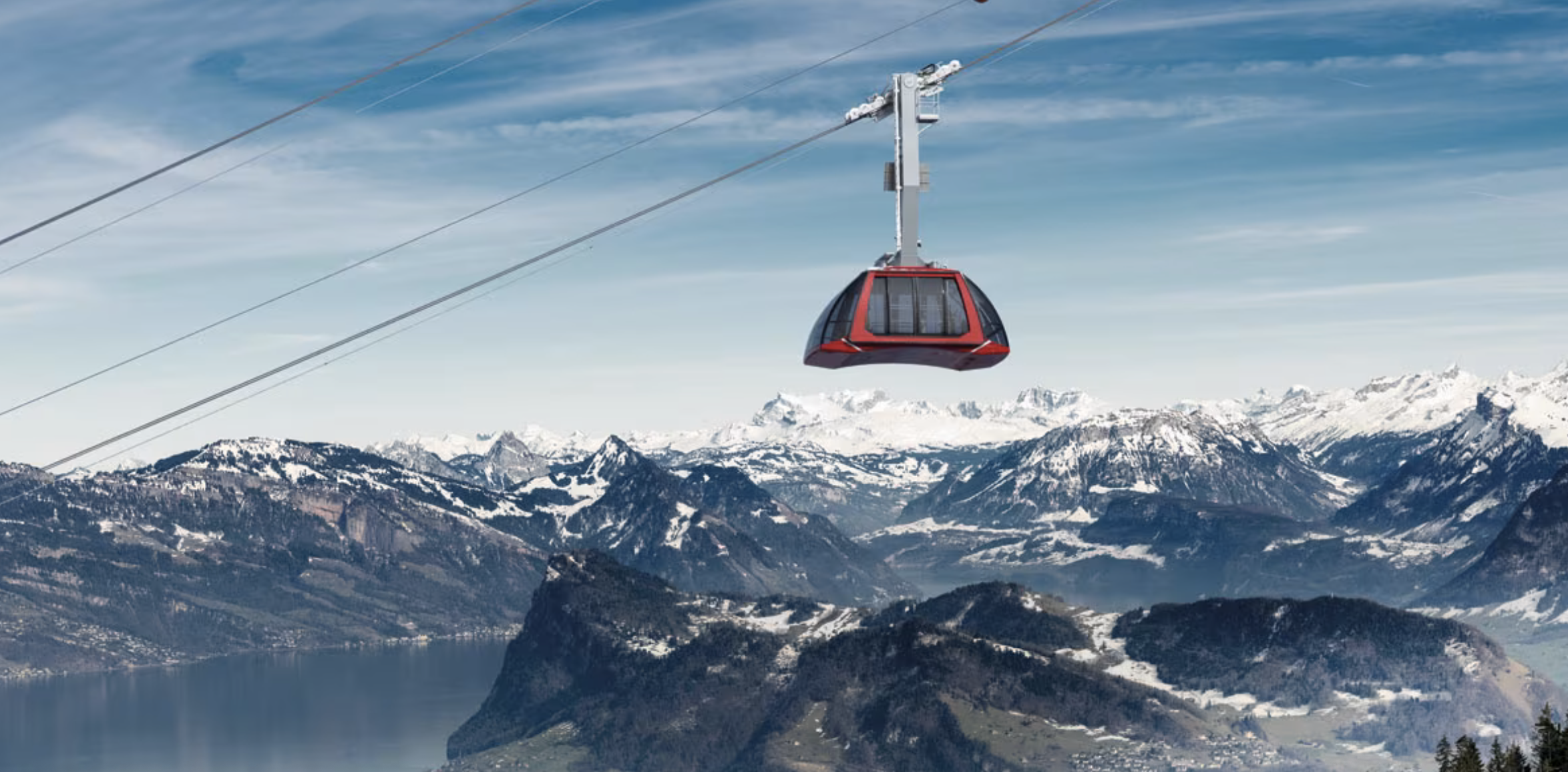
People used to search for “dragon stones” (likely meteorites) that were said to have healing powers. The mountain was considered so mysterious and dangerous that many were afraid to climb it at night or in bad weather. Even today, the town and mountain fully lean into the legend with dragon-themed trails and the cogwheel train proudly called the “Dragon Mountain” route. It’s a fun mix of folklore and jaw-dropping scenery that the kids will absolutely love.
THINGS TO DO
Chapel Bridge (Kapellbrücke) Chapel bridge is the oldest covered wooden bridge in Europe, originally built in 1333, and it stretches cross the Reuss River right in the heart of Lucerne. What makes it extra special are the 17th-century triangular paintings hanging under the roof that tell stories of Swiss history and saints.
Lion Monument (Löwendenkmal) This sandstone carving of a dying lion was created in 1820 to honor the roughly 800 Swiss Guards who were killed in 1792 while bravely defending King Louis XVI and his family during the French Revolution at the Tuileries Palace in Paris.
Mount Pilatus "Dragon Mountain" has the world's steepest cogwheel train and flower trails, such as the Tomlishorn Flower Trail
Mount Rigi Called the "Queen of the Mountains", Mount Rigi is accessible by boat, cogwheel train, or cable car and is said to have wildflower meadows and panoramic hikes with incredible Alps views.
Old Town (Altstadt) & Musegg Wall The Old Town has charming medieval streets with painted facades and climbable city walls and towers for panoramic views.
Glacier Garden (Gletschergarten) This unique geological park has Ice Age glacial potholes, fossils, a mirror maze, and lookout tower.
Spreuer Bridge (Spreuerbrücke)This 15th-century wooden bridge has Dance of Death" paintings on it that is said to be quite eerie and beautiful.
Hammetschwand Elevator (nearby Bürgenstock) Europe's tallest outdoor elevator with dizzying views over Lake Lucerne. We may not be doing this but it does sound thrilling!
Hirschpark Lucerne (Deer Park) This city park has red deer which you can watch daily feeding in the morning hours.
Hinter-Musegg Urban Farm Hidden eco-farm in the city with highland cattle, alpacas, mini pigs, dwarf goats and chickens.